A well-chosen saucepan set handles much more than sauces. The right sizes can cook oatmeal, rice, pasta, vegetables, soups, custards and weeknight leftovers without forcing you to use an oversized stockpot.
For this guide, we compared current manufacturer specifications, included saucepan capacities, body construction, cooking surface, cooktop compatibility, oven limits, cleaning requirements and warranty information. Products were not personally tested unless explicitly stated. We did not use temporary prices, star ratings or changing review counts as ranking factors.
Our best overall dedicated set is the GreenPan Valencia Pro because it combines useful 1.5- and 3-quart capacities, induction compatibility and easy-clean ceramic nonstick. The Nordic Ware Cardamom set is the design-focused alternative, while the GreenPan Swift offers smaller sizes at a lower entry cost.
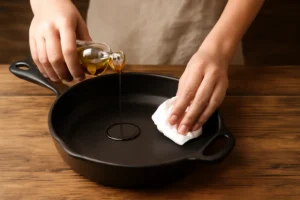
If nonstick longevity is your main concern, read our guide to maintaining nonstick cookware before choosing a coated set.
Quick recommendations
- Best overall: GreenPan Valencia Pro Saucepan Set
- Best design-forward set: Nordic Ware Cardamom Saucepan Set
- Best budget ceramic set: GreenPan Swift Saucepan Set
- Best stainless full-kitchen bundle: Cuisinart Heritage Stainless Set
- Best three-saucepan nonstick bundle: Rachael Ray Classic Brights Set
- Best value stainless bundle: Farberware TrueCook Set
Saucepan set comparison
| Set | Saucepans included | Cooking surface | Induction |
| GreenPan Valencia Pro | 1.5 & 3 qt | Ceramic nonstick | Yes |
| Nordic Ware Cardamom | 1.5 & 3 qt | Ceramic nonstick | No |
| GreenPan Swift | 1 & 2 qt | Ceramic nonstick | No |
| Cuisinart Heritage | 1.5 & 3 qt | Stainless steel | Yes |
| Rachael Ray Brights | 1, 2 & 3 qt | Nonstick | No |
| Farberware TrueCook | 1 & 3 qt | Stainless steel | Yes |
Confirm the exact current Amazon listing and included pieces before publishing each product block.
Best saucepan sets for everyday cooking in 2026
1. GreenPan Valencia Pro 1.5-Qt and 3-Qt Saucepan Set – Best overall
Research verdict: The most balanced dedicated saucepan set for shoppers who want two practical sizes, induction compatibility and ceramic nonstick cleanup.
This four-piece bundle includes 1.5-quart and 3-quart hard-anodized saucepans with lids. GreenPan uses its Magneto induction base, so the set works across induction, gas, electric, halogen and ceramic cooktops.

- SET INCLUDES: 8”, 9.5”, 11” frypans, 2QT & 3QT saucepans with lids, 3QT sauté pan with lid, 5QT stockpot with lid, 11…
- CUTTING-EDGE CERAMIC NONSTICK: Infused with diamonds, GreenPan’s metal utensil safe ceramic nonstick offers remarkable d…
- TOXIN-FREE: Our signature ceramic nonstick coating is free of PFAS, PFOA, lead or cadmium.
Key specifications
- Two covered saucepans: 1.5 qt and 3 qt
- Hard-anodized aluminum bodies
- PFAS-free ceramic nonstick cooking surface
- Induction-compatible Magneto base
- Oven and broiler safe up to 600 F; lid limits may differ
Advantages
- Useful small and medium capacities
- Easy-release surface for oatmeal, rice and sauces
- Compatible with induction and conventional cooktops
Limitations to know
- Ceramic nonstick still requires careful heat and utensil use
- Higher cost than entry-level aluminum sets
Best for: Most households wanting an easy-clean, two-size set.
2. Nordic Ware Cardamom 4-Piece Saucepan Set – Best design-forward set
Research verdict: A stylish two-pan set for cooks using gas, electric or ceramic stovetops who value lightweight handling and PFAS-free ceramic nonstick.
The Cardamom set pairs 1.5-quart and 3-quart spun-aluminum saucepans with stainless-steel lids and natural wood handles. The bodies heat quickly, while the two sizes cover reheating, grains, soups and everyday sauces.
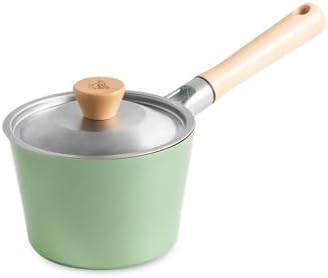
- Crafted from spun lightweight yet durable aluminum for fast, even heating and finished with a double-layer ceramic nonst…
- Natural wood handles add warmth and grip, while the non-toxic ceramic coating ensures a healthier cooking experience
- Compatible with gas, electric, and ceramic stovetops, this thoughtfully designed pan is as beautiful as it is versatile
Key specifications
- Two covered saucepans: 1.5 qt and 3 qt
- Spun-aluminum construction
- Double-layer ceramic nonstick interior
- Natural wood handles
- Compatible with gas, electric and ceramic stovetops
Advantages
- Distinctive design and comfortable handles
- Lightweight compared with clad stainless steel
- Two useful everyday capacities
Limitations to know
- Not suitable for induction
- Wood handles require hand care and keep the pans out of the oven
Best for: Style-conscious cooks who do not use induction.
3. GreenPan Swift 1-Qt and 2-Qt Saucepan Set – Best budget ceramic set
Research verdict: A lower-cost ceramic option for small households and cooks who mostly prepare sides, sauces and reheated portions.
The Swift bundle includes compact 1-quart and 2-quart aluminum saucepans. Drip-free rims help with pouring, and stainless-steel handles provide a firmer grip than molded plastic handles.

- SET INCLUDES: 1QT Saucepan with and 2QT Saucepan
- REINFORCED WITH DIAMONDS: Metal utensil safe, GreenPan’s original diamond-infused nonstick coating offers remarkable dur…
- TOXIN-FREE: GreenPan’s Thermolon healthy ceramic nonstick coating is free of PFAS, PFOA, lead, and cadmium
Key specifications
- Two saucepans: 1 qt and 2 qt
- Quick-heating aluminum bodies
- PFAS-free ceramic nonstick coating
- Dishwasher safe, although hand washing is recommended
- Oven safe up to 600 F
Advantages
- Affordable entry into ceramic nonstick
- Compact sizes suit one- or two-person cooking
- Easy pouring and cleanup
Limitations to know
- Not compatible with induction
- Both capacities may feel small for family batch cooking
Best for: Small kitchens, couples and budget-focused ceramic shoppers.
4. Cuisinart Heritage Stainless 11-Piece Set – Best stainless full-kitchen bundle
Research verdict: The best choice here for shoppers who want two saucepans as part of a broader stainless-steel kitchen setup.
This collection includes covered 1.5-quart and 3-quart saucepans plus a saute pan, stockpot, skillets and steamer insert. Its stainless construction, drip-free rims and induction compatibility make it a practical long-term starter set.

- KITCHEN COOKWARE SET: This Cuisinart stainless steel cookware set includes 1.5 qt. & 2.5 qt. saucepans w/glass covers, 3…
- PREMIUM STAINLESS STEEL: Premium stainless steel pots and pans set with aluminum encapsulated base heats quickly and spr…
- COOL GRIP HANDLES: Cast stainless steel Cool Grip stick handles are contoured for a secure grip and designed to stay coo…
Key specifications
- Covered saucepans: 1.5 qt and 3 qt
- Premium stainless-steel construction
- Tempered-glass lids
- Compatible with all stovetops, including induction
- Dishwasher safe and oven safe to 350 F
Advantages
- Broad set replaces several cookware purchases
- Stainless surface tolerates browning and deglazing
- Lifetime warranty
Limitations to know
- More pieces and storage space than saucepan-only buyers need
- Stainless steel has a learning curve for sticking and temperature control
Best for: New kitchens wanting stainless saucepans plus core cookware.
5. Rachael Ray Classic Brights 14-Piece Set – Best three-saucepan nonstick bundle
Research verdict: A family-oriented bundle with three covered saucepan sizes and easy-clean nonstick cookware.
The set includes 1-, 2- and 3-quart covered saucepans, along with larger pots, a saute pan and skillets. Hard-anodized aluminum supports quick, even heating, while the colorful rubberized handles improve grip.

Covered saucepans: 1 qt, 2 qt and 3 qt
Hard-anodized aluminum bodies
Nonstick interiors
Glass lids and rubberized handles
Dishwasher safe; oven safe to 350 F
Advantages
- Three saucepan capacities cover more serving sizes
- Full cookware assortment for family kitchens
- Easy-release surface simplifies cleanup
Limitations to know
- Large set requires substantial cabinet space
- Not the right fit for buyers avoiding conventional nonstick
Best for: Families wanting multiple saucepan sizes and a complete nonstick collection.
6. Farberware TrueCook Stainless Steel 12-Piece Set – Best value stainless bundle
Research verdict: A value-focused stainless bundle with two covered saucepans and induction compatibility.
The TrueCook set includes 1-quart and 3-quart covered saucepans, a stockpot, frying pans, a sheet pan, steamer insert and utensils. Interior measuring marks are useful for grains, soups and sauces without a separate measuring vessel.

- 12-PIECE STAINLESS STEEL POTS AND PANS SET: Includes 1-qt and 3-qt saucepans with lids, 6-qt stockpot with lid, 9.5- and…
- EVEN HEATING WITH NO HOT SPOTS: Our stainless cookware set features an encapsulated clad base delivering fast, even heat…
- STAINLESS STEEL PAN SET WITH MEASURING MARKS: Stainless steel interior keeps flavors pure with no metallic aftertaste; c…
Key specifications
- Covered saucepans: 1 qt and 3 qt
- Stainless steel with encapsulated clad base
- Interior measuring marks
- Induction compatible
- Dishwasher safe; hand washing recommended
Advantages
- Strong piece count for the cost
- Useful small and medium saucepan sizes
- Works on induction
Limitations to know
- Plastic handles limit high-temperature oven use
- Full bundle includes accessories some buyers may not need
Best for: Budget-conscious households building an induction-ready kitchen.
How to choose the right saucepan set
Start with useful capacities
A 1- to 1.5-quart pan is convenient for sauces, oatmeal and small portions. A 2- to 3-quart pan handles grains, vegetables, soups and family sides. Most households benefit more from two distinct sizes than from nearly identical pans.
Choose stainless steel or nonstick deliberately
Stainless steel is durable, uncoated and good for browning or deglazing, but it needs better heat and fat control. Nonstick simplifies delicate foods and cleanup, yet the coating requires moderate heat and non-abrasive utensils.
Confirm cooktop compatibility
If you use induction, the base must be magnetic and the manufacturer must explicitly list induction compatibility. Aluminum cookware without a bonded magnetic base will not work on induction.
Check lids, rims and handles
Fitted lids help control evaporation. Pouring rims reduce drips, while secure handles matter when a saucepan is full. Remember that lid and handle materials can have lower oven limits than the pan body.
Avoid buying unnecessary pieces
A large cookware collection can look like better value, but extra skillets and utensils require storage. Choose a full-kitchen bundle only when you need most of its pieces.
If storage is limited, use the practical ideas in our small-kitchen organization guide before choosing a large cookware bundle.
Saucepan care and safety tips
- Match burner size to the pan base and begin with moderate heat.
- Do not preheat an empty nonstick saucepan over high heat.
- Use silicone, nylon or wood utensils when the manufacturer recommends them.
- Allow hot pans to cool before washing to reduce thermal shock.
- Follow the exact dishwasher guidance; “dishwasher safe” does not always mean dishwasher cleaning is best for longevity.
- Never exceed the lowest oven-temperature limit among the pan, lid and handle components.
Frequently asked questions
A small 1- to 1.5-quart saucepan and a medium 2- to 3-quart saucepan cover most everyday tasks. Larger households may prefer the medium pan at the upper end of that range.
Neither is universally better. Stainless steel favors durability, browning and uncoated cooking. Nonstick favors delicate foods and fast cleanup. Your cooking habits should decide.
Only when the pan includes a magnetic induction base. Check the manufacturer specification rather than assuming all metal cookware works on induction.
Glass lets you monitor food without lifting the lid, while stainless steel is lighter and less breakable. Both work well when they fit securely.
Some can, but hand washing may still preserve finishes and coatings longer. Follow the care instructions for the exact collection.
Quality stainless cookware can last for many years with proper care. Nonstick lifespan depends heavily on coating quality, heat exposure, utensil choice and cleaning habits.
Final recommendation
Choose the GreenPan Valencia Pro if you want a dedicated two-size set with induction compatibility and ceramic nonstick convenience. Choose Nordic Ware Cardamom for distinctive styling on gas, electric or ceramic ranges, or GreenPan Swift for compact budget-friendly sizes. If you need to outfit an entire kitchen, the Cuisinart Heritage, Rachael Ray Classic Brights and Farberware TrueCook bundles each provide at least two saucepan capacities alongside other core cookware.
Before buying, confirm that you will use the included sizes, that the set works with your cooktop and that its care requirements fit your routine. A smaller set you use every day is better value than a large bundle that fills the cabinet.