The Kalita Wave 185 Stainless Steel is the best pour over coffee maker for most home brewers because its flat-bottom bed and three-hole design make an even, balanced cup easier to repeat. Choose the Hario V60 02 Plastic if you want maximum control for less money, the OXO Brew Pour-Over with Water Tank if you want the easiest learning curve, or the CHEMEX 6-Cup if you usually brew for two or more people.
Pour-over coffee looks almost too simple: place a dripper over a mug, add a filter and coffee, then pour hot water. The small details, however, can change the result from bright and sweet to weak, bitter, or frustratingly slow.
The good news is that you do not need the most expensive brewer. You need one that matches how much effort you want to put into each cup. A forgiving flat-bottom dripper suits a busy morning. A V60 rewards someone who enjoys adjusting grind size and pouring technique. A hybrid immersion brewer makes consistency easier, while a glass carafe is better when one mug is not enough.
This guide compares the best pour over coffee makers and drippers by brewing style, serving size, filter cost, cleanup, durability, and learning curve—so you can buy the right brewer the first time.
Affiliate disclosure: Home & Kitchen Find may earn a commission from qualifying purchases made through links in this article, at no extra cost to you. Read our affiliate disclosure.
Best Pour Over Coffee Makers at a Glance
| Pour-over maker | Best for | Practical brew size |
| Kalita Wave 185 Stainless Steel | Best overall for most people | 1–2 standard mugs |
| Hario V60 Plastic, Size 02 | Best value and control | 1–2 standard mugs |
| OXO Brew with Water Tank | Best for beginners | Up to 12 oz |
| CHEMEX Classic 6-Cup | Best for multiple cups | About 30 oz |
| Hario Switch 03 | Best hybrid dripper | Up to 360 mL |
| ORIGAMI Dripper Air S | Best for experimentation | 1–2 cups |
| Bodum Pour Over 34 oz | Best reusable-filter option | Up to 34 oz |
| YETI Rambler Pour Over | Best for camping and travel | Single-cup brewing |
Which One Should You Buy?
- You want the safest all-around choice: Buy the Kalita Wave 185.
- You enjoy dialing in recipes: Buy the Hario V60 02 Plastic.
- You want pour-over coffee without mastering a pouring pattern: Buy the OXO Brew with Water Tank.
- You regularly brew more than one mug: Buy the CHEMEX 6-Cup.
- You want both immersion and traditional pour-over brewing: Buy the Hario Switch 03.
- You like trying different filter shapes and recipes: Buy the ORIGAMI Dripper Air S.
- You want to skip disposable paper filters: Buy the Bodum 34-Ounce Pour Over.
- You need a durable dripper for a campsite, RV, or patio: Buy the YETI Rambler Pour Over.
How We Chose These Pour-Over Coffee Makers
We did not rank products by whichever listing had the biggest discount or the most reviews on a particular day. This is a research-based buying guide, not a claim that every model was personally tested in our kitchen.
We compared each brewer using six practical criteria:
- Consistency: How easily can a home user repeat a good cup?
- Control: Can the brewer respond well as grind size, water flow, and recipe change?
- Workflow: How much attention, special equipment, and cleanup does it require?
- Capacity: Is it designed for one cup, two mugs, or a larger batch?
- Ongoing cost: Are replacement filters affordable and easy to find?
- Durability: Is the brewer suited to a counter, office, suitcase, or campsite?
We also checked current manufacturer specifications for size, material, filter compatibility, and capacity. No paid placement determined the order.
1. Kalita Wave 185 Stainless Steel — Best Overall Pour Over Coffee Maker
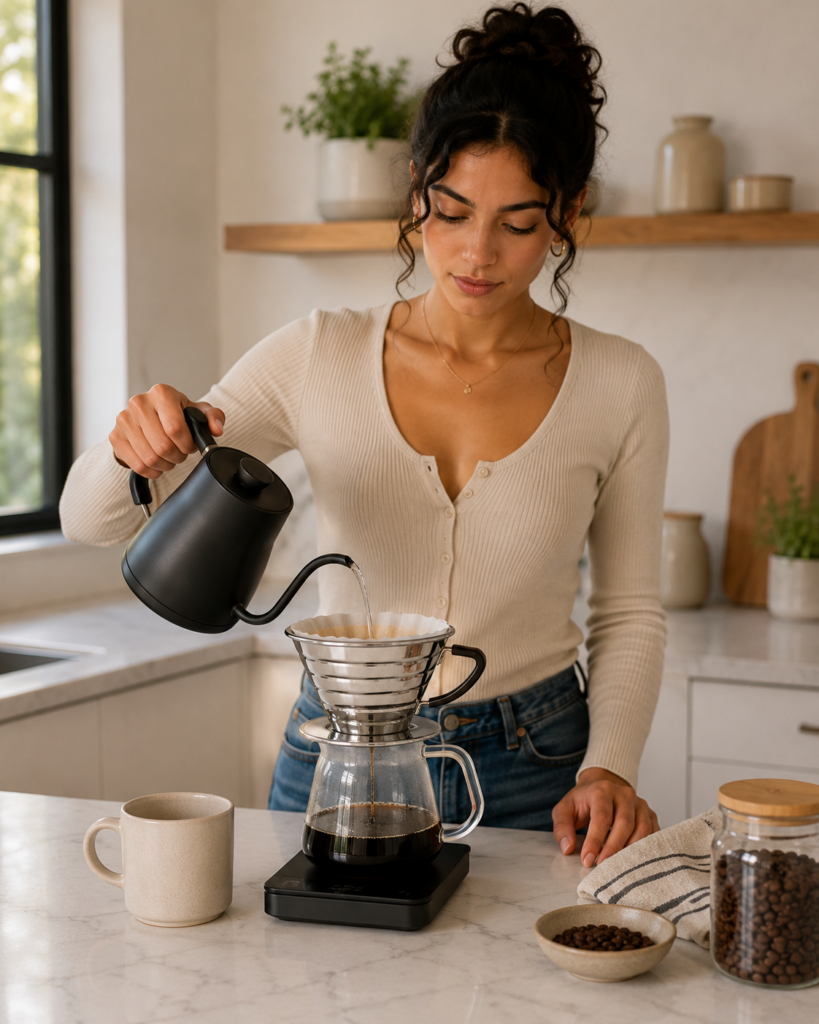
The Kalita Wave 185 is the brewer we would recommend to the largest number of people. Its flat-bottom filter creates a broad, relatively even coffee bed, while Kalita’s three-hole outlet limits the flow compared with a large, open cone. That combination makes the Wave more forgiving when your pouring speed is not perfectly precise.
The stainless-steel 185 model is designed for roughly two to four manufacturer-sized servings, which translates more realistically to one large mug or two smaller cups, depending on your recipe. It is also much less stressful to own than a glass dripper: there is no delicate handle or carafe to worry about during daily cleanup.
Coffee from the Wave tends to be balanced and sweet when the grind is in the right range. It still gives you enough control to experiment, but it does not punish a slightly uneven pour as quickly as an open-bottom cone can.
Why it converts: It hits the middle ground buyers usually want—repeatable results, durable construction, manageable technique, and enough capacity for everyday use.
Key details
- Flat-bottom Wave geometry
- Three-hole outlet
- Stainless-steel construction
- Uses Kalita Wave 185 paper filters
- Best for one large mug or two smaller cups
Choose it if: You want a dependable manual brewer that can grow with your skills.
Skip it if: You want filters available in almost every grocery store, or you mainly brew very large batches.
Watch before buying: Confirm that you are ordering the 185 size, not the smaller 155, and add Wave 185 filters to the same order.
2. Hario V60 Plastic, Size 02 — Best Value and Best for Maximum Control
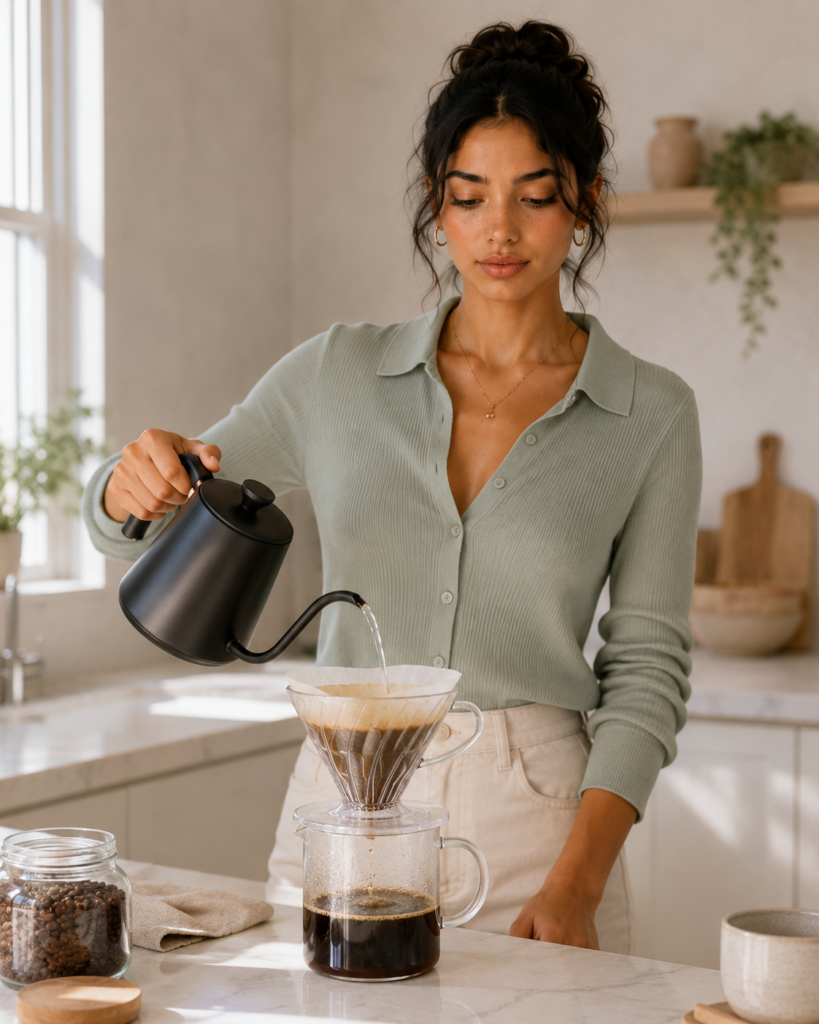
The humble plastic V60 is one of the smartest purchases in specialty coffee. It is inexpensive, lightweight, hard to break, and less prone to pulling heat away from the slurry than a thick ceramic dripper. More importantly, its large opening and spiral ribs give you direct control over flow.
That freedom is the V60’s biggest advantage and its biggest warning label. Change your grind, pouring height, agitation, or total brew time, and the cup can change noticeably. Experienced brewers love that responsiveness. A complete beginner may need a few tries before the results become consistent.
Size 02 is the versatile choice for most homes. Hario rates it for one to four cups, though it is most comfortable for one generous mug or two smaller servings. V60 02 filters are widely sold online, and many coffee shops keep them in stock.
Why it converts: It delivers a very high performance ceiling without a premium price. Buyers who are comparing materials should not assume ceramic automatically makes better coffee—the plastic model is practical and thermally efficient.
Key details
- Conical brewer with spiral ribs and a large bottom opening
- Polypropylene construction
- Uses Hario V60 02 cone filters
- Lightweight and travel-friendly
- Best with a controlled pour and a consistent grinder
Choose it if: You enjoy the ritual and want to adjust recipes as your technique improves.
Skip it if: You want the brewer to regulate the pour for you.
Watch before buying: Match the filters to V60 size 02. Similar-looking generic filters can fit differently and change flow.
3. OXO Brew Pour-Over Coffee Maker with Water Tank — Best for Beginners
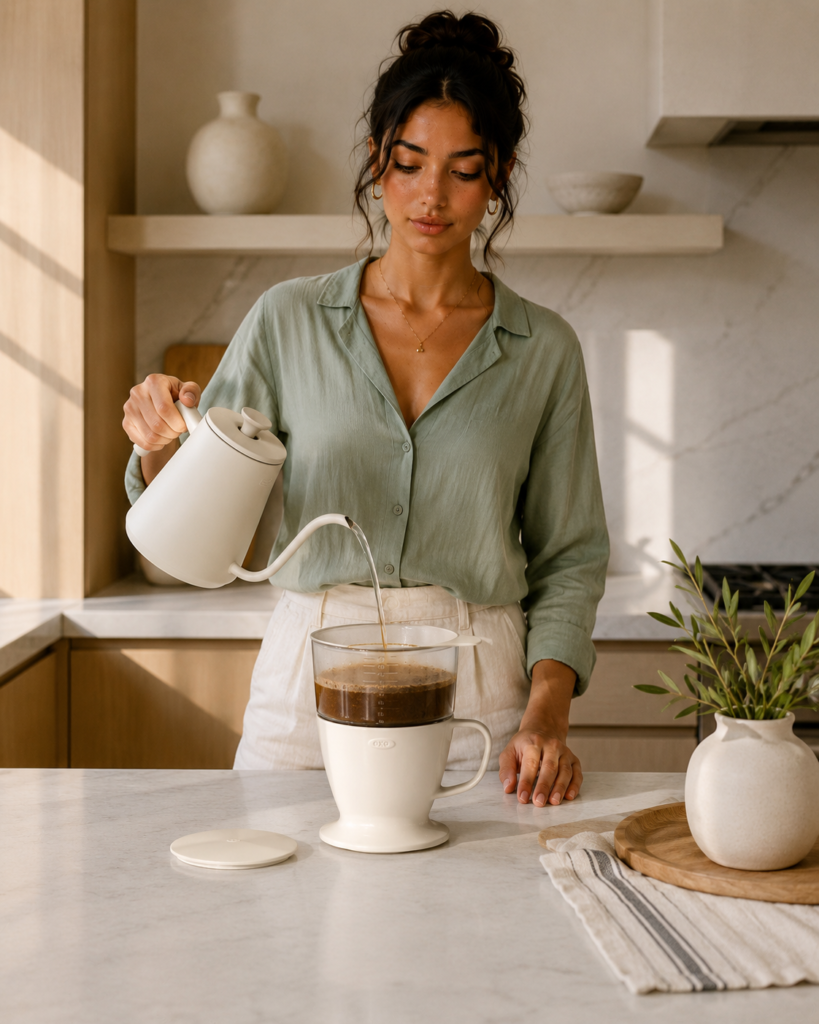
If the phrase “slow concentric circles” already feels like too much work before breakfast, the OXO Brew is the easiest place to start. Instead of asking you to control the stream, it uses a water tank with a patterned set of holes to distribute water over the coffee at a controlled rate.
You still grind the beans, add the filter, and heat the water, but the tank handles the fussy part of the pour. That also means you can make a respectable cup with a standard kettle; a gooseneck is helpful but not essential for this brewer.
OXO lists a maximum brew volume of 12 ounces, making this a true single-mug option. The lid helps hold heat while brewing and doubles as a drip tray afterward. It uses common #2 cone filters, which are easier to find locally than many proprietary specialty filters.
Why it converts: It removes the most intimidating part of pour-over coffee while keeping the cleanup and counter footprint small.
Key details
- Auto-drip water tank with a controlled hole pattern
- Brews up to 12 ounces
- Uses standard #2 cone filters
- Lid doubles as a drip tray
- Dishwasher-safe brewer components, according to OXO
Choose it if: You want a simple, low-stress single cup at home, in a dorm, or at the office.
Skip it if: You want to control every pulse and flow-rate adjustment or brew more than one mug at a time.
Watch before buying: This is the model with the water tank, not a conventional open dripper.
4. CHEMEX Classic Series 6-Cup — Best Pour Over Coffee Maker for Multiple Cups
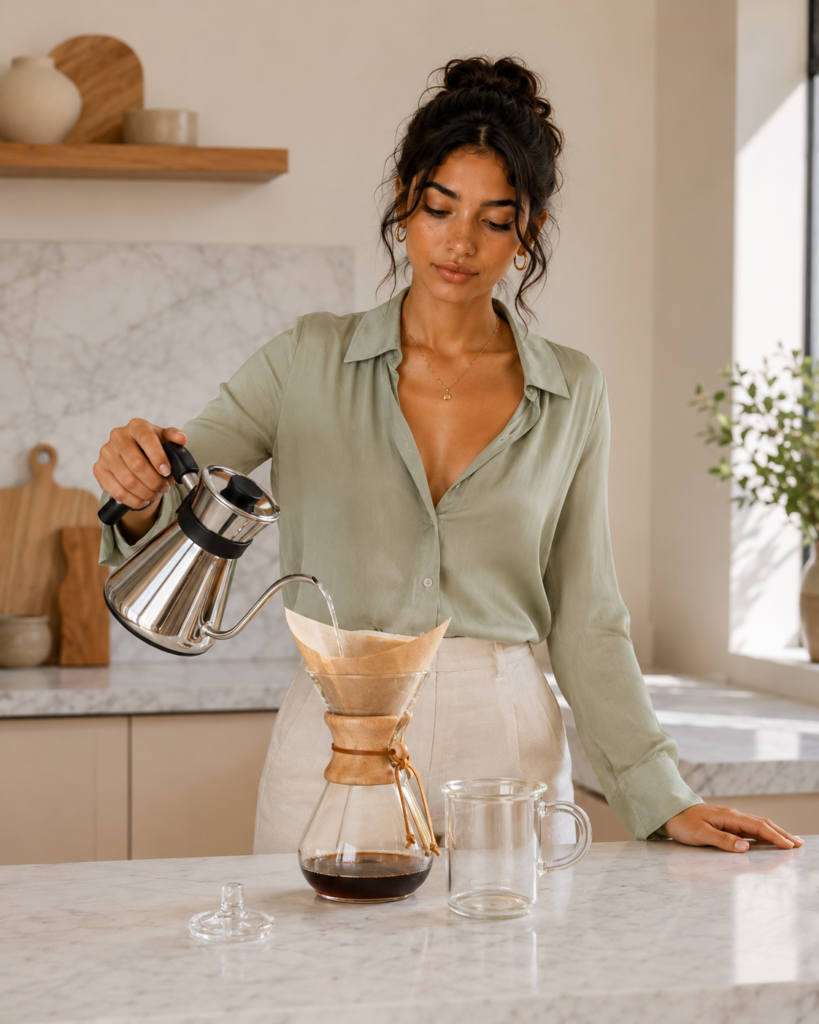
The CHEMEX is both a brewer and a serving carafe, which makes it a natural pick for couples, brunch, or anyone who wants more than one cup from a single brew. The 6-Cup Classic has a 30-ounce capacity, a borosilicate glass body, and the familiar wood collar with a leather tie.
Its bonded paper filters are thicker than typical paper coffee filters. They hold back more fine particles and oils, producing a clean, light-bodied cup that can make bright or floral coffees feel especially clear. That style is not automatically “better”—people who prefer a heavier, oilier cup may enjoy a metal filter or immersion brewer more.
The 6-Cup name can be misleading because coffee manufacturers often count small servings. Think of 30 ounces as the useful number. Depending on your ratio and mug size, that is roughly two generous mugs or several smaller cups.
Why it converts: It looks good enough to serve from, handles a larger batch than most drippers, and creates a distinctively clean cup.
Key details
- 30-ounce glass brewer and carafe
- Borosilicate glass with wood collar and leather tie
- Uses CHEMEX bonded filters sized for the brewer
- Excellent for clear, low-sediment coffee
- No separate server required
Choose it if: You often brew for two, want a clean flavor profile, or like bringing the brewer directly to the table.
Skip it if: You need something unbreakable or do not want to keep specialty paper filters on hand.
Watch before buying: Add compatible CHEMEX 6-, 8-, or 10-cup bonded filters. The brewer normally does not replace the need for filter papers.
5. Hario Switch Immersion Dripper 03 — Best Hybrid Pour Over Coffee Maker
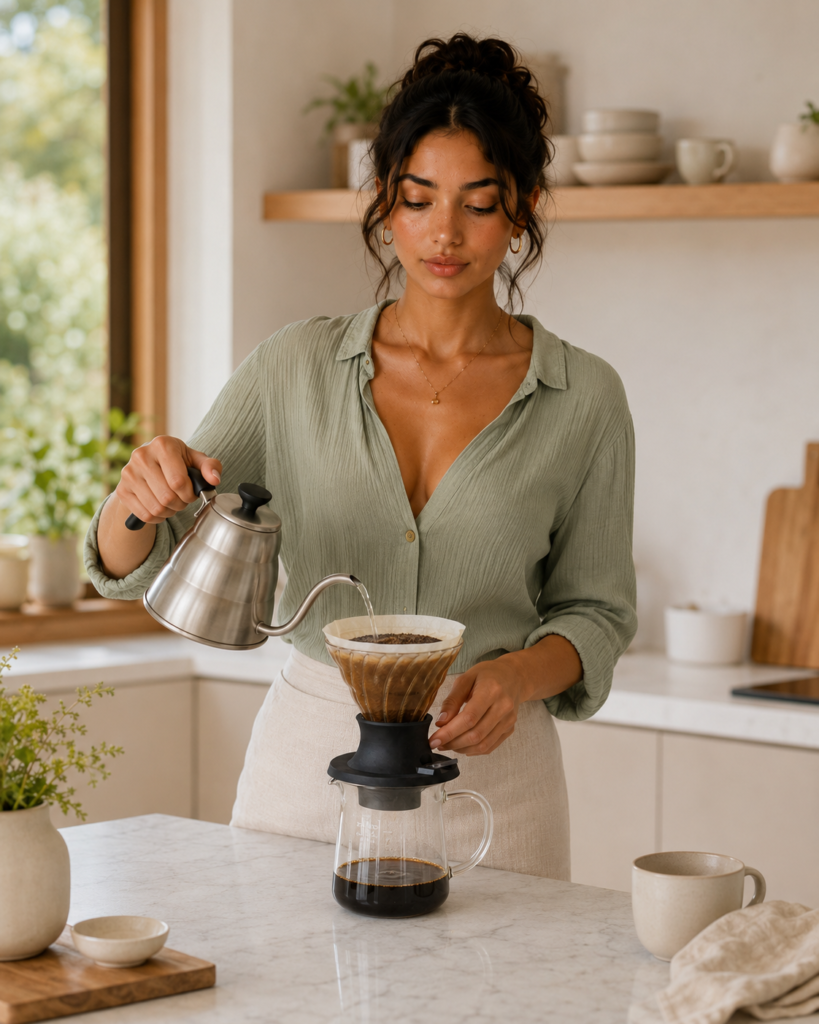
The Hario Switch combines a V60-style glass cone with a valve at the bottom. Leave the switch open and it behaves like a traditional pour-over. Close it and the coffee steeps before you release it into the cup, much like an immersion brewer.
That simple valve makes the Switch unusually flexible. Beginners can start with an immersion recipe because steep time is easier to repeat than a perfect pour. Later, they can try traditional V60 recipes or hybrid methods that combine immersion and percolation.
The 03 / 360 mL version is the more versatile size for most buyers. Its practical capacity suits one substantial mug or two smaller servings. It uses V60 03 papers, so make sure the filter size matches the brewer.
Why it converts: One purchase covers an easy, forgiving method and a more hands-on pour-over method. It is especially persuasive for shoppers who are torn between a V60 and an immersion brewer.
Key details
- Hybrid immersion and pour-over design
- Glass V60-style cone with silicone base and switch mechanism
- 360 mL finished capacity for the 03 model
- Uses V60 03 paper filters
- Can brew with the valve open, closed, or both during one recipe
Choose it if: Consistency matters, but you still want room to experiment.
Skip it if: You want the lightest, simplest, or least breakable dripper.
Watch before buying: Hario sells more than one Switch size. Confirm the 03 / 360 mL model and matching 03 filters.
6. ORIGAMI Dripper Air S — Best for Experimenting With Recipes
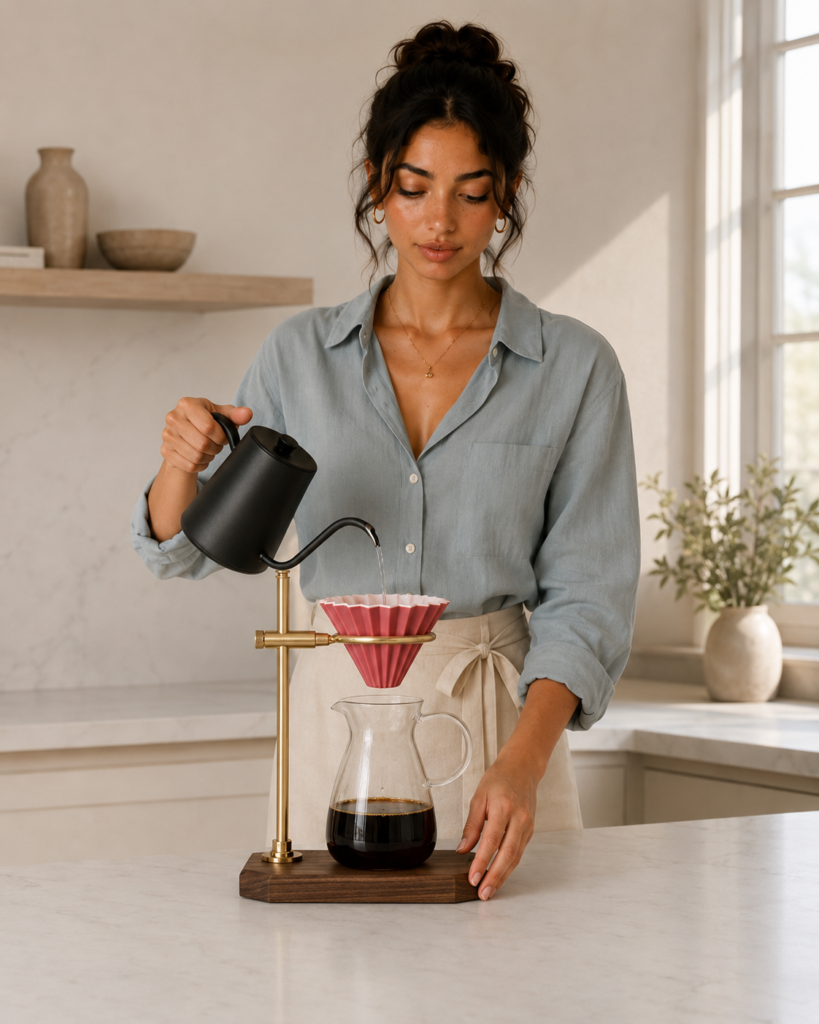
The ORIGAMI Dripper Air S is a lightweight resin brewer with 20 deep vertical ribs. Those ribs create air channels around the paper and encourage a fast, responsive flow. It is a fun choice for someone who already knows the basics and wants to explore how filter shape and pouring technique affect the cup.
ORIGAMI offers cone-shaped and wave-style filters within its brewing system, and changing between them can noticeably alter the coffee bed and flow. The Air S is designed for one to two cups, weighs about 64 grams, and is dishwasher safe according to the manufacturer. Its resin body is also much less nerve-racking to pack than porcelain.
This is not our first recommendation for a buyer who wants the fewest decisions. Its strength is versatility, and versatility invites tinkering.
Why it converts: It combines distinctive design, portability, and a recipe-friendly platform without the fragility of ceramic.
Key details
- Lightweight AS-resin body
- 20-rib design
- Sized for one to two cups
- Compatible with ORIGAMI’s cone and wave-filter brewing approach
- Dishwasher safe
Choose it if: You enjoy comparing filters, changing flow, and refining specialty-coffee recipes.
Skip it if: You want one standard filter and one no-fuss method.
Watch before buying: Some listings sell the dripper and holder separately. Confirm whether the base and filters are included in the Amazon bundle you select.
7. Bodum Pour Over 34 Ounce — Best Reusable-Filter Pour Over Coffee Maker
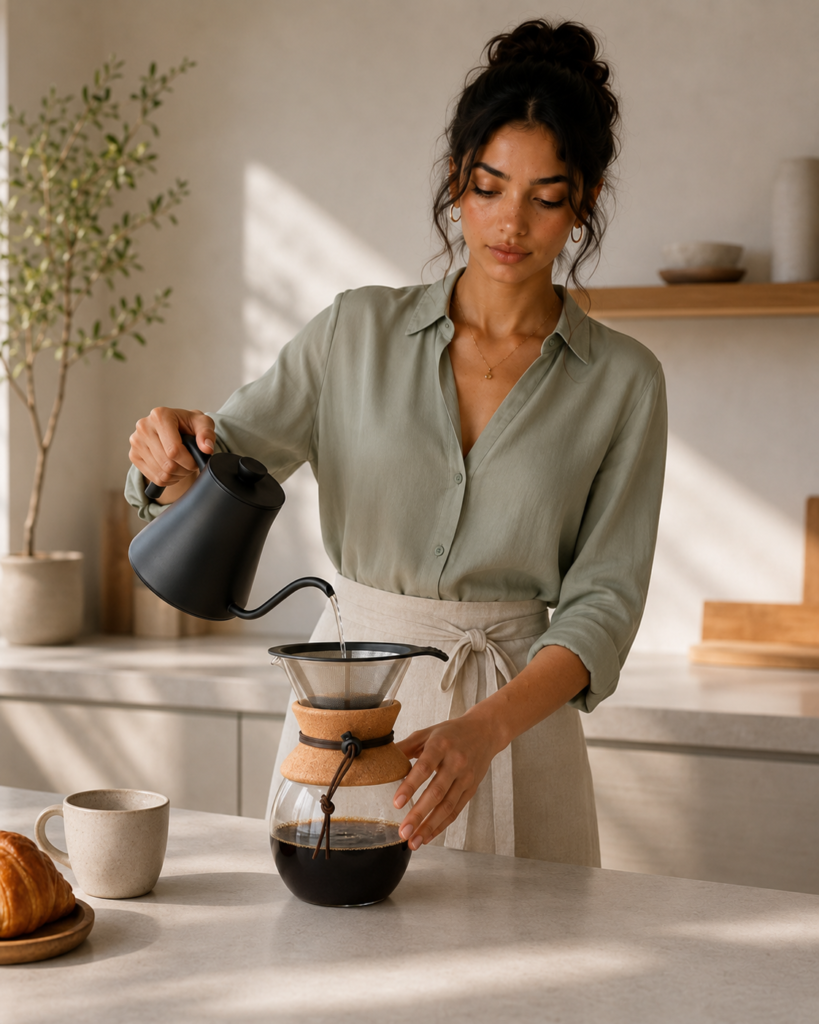
The 34-ounce Bodum is the practical answer for buyers who do not want to reorder paper filters. It pairs a borosilicate glass carafe with a permanent stainless-steel mesh filter, so the coffee drips directly into the serving vessel.
A metal filter does not produce the same cup as paper. It allows more coffee oils and very fine particles through, creating a fuller body and sometimes a little sediment at the bottom. Some drinkers prefer that richness; others will miss the crisp clarity of a V60 or CHEMEX.
The generous capacity works well for households that brew several servings. The carafe and filter are straightforward to rinse, but the reusable mesh needs a thorough wash so old coffee oils do not affect tomorrow’s brew.
Why it converts: It eliminates ongoing paper-filter purchases and provides a larger carafe at an approachable level.
Key details
- 34-ounce borosilicate glass carafe
- Permanent stainless-steel mesh filter
- Fuller-bodied, more oil-rich cup than paper filtration
- Suitable for multiple servings
- Cork-band versions require separate care from the glass and filter
Choose it if: You want a paperless setup and enjoy coffee with more body.
Skip it if: Your priority is the cleanest possible cup with almost no sediment.
Watch before buying: Bodum offers different sizes and band materials. Confirm 34 ounces and the permanent-filter configuration.
8. YETI Rambler Pour Over — Best for Camping and Travel
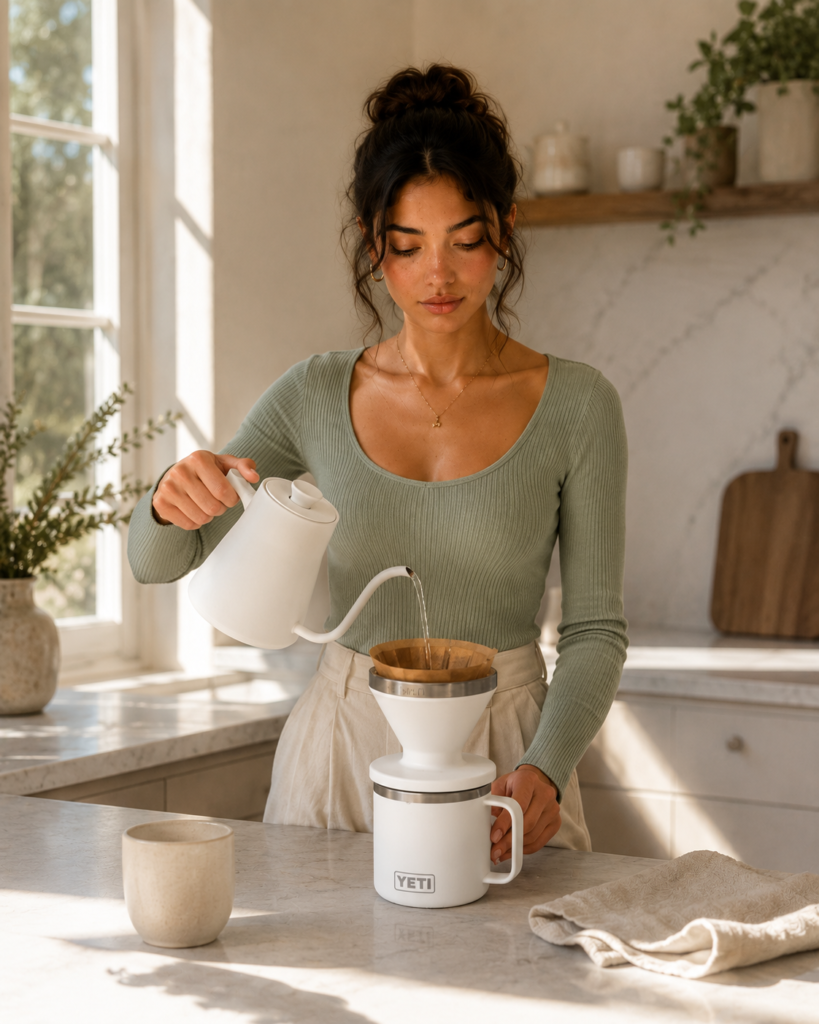
Glass and campsites are not a comfortable combination. The YETI Rambler Pour Over uses double-wall 18/8 stainless steel and is designed to sit on most Rambler drinkware, giving outdoor coffee drinkers a sturdy alternative to a ceramic or glass cone.
It accepts V60 size 02 cone filters, which is convenient if you already use a V60 at home. YETI lists it as dishwasher safe and backs it with a five-year warranty. At about 0.6 pound, it is more substantial than a plastic travel dripper, but that extra weight buys durability and heat retention.
This is a purpose-built choice, not the best value for a kitchen counter. The matching mug is also sold separately, so budget for the complete setup if you do not already own compatible Rambler drinkware.
Why it converts: It solves a specific problem exceptionally well: brewing a manual cup where breakable drippers feel impractical.
Key details
- Double-wall 18/8 stainless steel
- Uses V60 size 02 cone filters
- Fits most YETI Rambler drinkware
- Dishwasher safe
- Five-year manufacturer warranty
Choose it if: You brew outside, travel by RV, or want a durable patio and workshop setup.
Skip it if: You only brew at home and want the lowest-cost path to a great cup.
Watch before buying: The pour-over dripper is the featured product; a Rambler mug is generally a separate purchase.
Flat-Bottom, Cone, Immersion, or Metal Filter: What Changes in the Cup?
The shape does not guarantee good coffee, but it changes how water moves through the grounds and how much control the brewer gives you.
Flat-bottom drippers
A flat-bottom brewer such as the Kalita Wave spreads coffee across a wider, shallower bed. Its controlled outlet can make extraction easier to repeat, which is why it is our best overall recommendation for most home users.
Best for: Balanced cups, repeatability, and an easier learning curve.
Open cone drippers
A V60 or ORIGAMI cone lets water flow quickly when the grind and pouring pattern allow it. That makes the brewer responsive: you can produce excellent coffee, but technique has a larger influence on the result.
Best for: Control, experimentation, and buyers who enjoy the brewing process.
Immersion hybrids
The Hario Switch can hold water and coffee together before draining. Steeping reduces reliance on a perfectly timed stream and makes it easier to keep contact time consistent.
Best for: Beginners who still want an upgrade path and experienced users who enjoy hybrid recipes.
Permanent metal filters
The Bodum’s mesh allows more oils and tiny particles into the carafe. The result is heavier and less paper-clean, but it avoids disposable filters.
Best for: Fuller body, less paper waste, and fewer filter reorders.
What You Need for Good Pour-Over Coffee
The brewer matters, but the grinder usually changes the cup more than upgrading from one respected dripper to another.
1. A burr grinder
A burr grinder creates a more consistent particle size than a blade grinder. Consistency helps water move through the bed evenly and makes your adjustments more predictable. If a brew finishes too quickly and tastes thin or sharp, grind finer. If it stalls and tastes harsh or drying, grind coarser.
2. Fresh coffee
Buy whole beans when practical and keep the bag sealed away from heat, moisture, and sunlight. A medium or light-medium roast is an easy starting point for tasting the clarity that paper-filter pour-over can provide, but use the roast you genuinely enjoy.
3. A scale with a timer
A basic kitchen scale makes a recipe repeatable. Measuring “two scoops” and guessing the water level creates more variation than most people realize.
4. The correct filters
Filter shape and size are not interchangeable. Check the brewer name and size before ordering: Wave 185, V60 02, V60 03, standard #2, or CHEMEX bonded filters.
5. A kettle you can control
A narrow spout helps you control where and how quickly water lands. Read our gooseneck kettle vs. regular kettle comparison to decide whether the upgrade is worthwhile. If you also want temperature presets, compare our best electric kettles.
You do not need a gooseneck kettle for the OXO water-tank brewer, and you can make acceptable coffee with a careful pour from a standard kettle. A gooseneck simply makes traditional V60, Kalita, CHEMEX, and ORIGAMI recipes easier to control.
An Easy Pour-Over Recipe to Start With
Use this as a baseline, then adjust one variable at a time.
Starter recipe
- 20 grams of coffee
- 320 grams of water
- Medium-fine grind
- Water around 200°F
- Total brew time target: roughly 2:45 to 3:30
Method
- Place the filter in the brewer and rinse it with hot water. Discard the rinse water.
- Add 20 grams of ground coffee and gently level the bed.
- Pour about 50 to 60 grams of water, wetting all the grounds. Wait about 40 seconds.
- Continue pouring slowly in controlled pulses until the scale reaches 320 grams.
- Let the water drain, remove the brewer, swirl the coffee, and taste it after it cools slightly.
Taste matters more than hitting an exact stopwatch number. If the cup tastes sour, hollow, or weak, try a slightly finer grind. If it tastes bitter, astringent, or dry, try a slightly coarser grind. Change only one thing per brew so you know what helped.
How to Choose the Best Pour Over Coffee Maker
Match the brewer to your patience level
The OXO requires the least pouring skill. The Kalita Wave offers a friendly balance between ease and control. The V60 and ORIGAMI reward more attention. The Hario Switch lets you choose between an easy steep and an active pour.
Buy for your real mug size
Manufacturer “cups” are often much smaller than a typical U.S. mug. Look at ounces or milliliters instead of relying on the number in the product name. For one 10- to 12-ounce drink, almost every pick here works. For two full mugs, the CHEMEX or Bodum is more convenient.
Check local filter availability
The cost of the dripper is only part of ownership. A standard #2 filter is easy to find. V60 papers are common online. Kalita and CHEMEX filters may require more planning. Order an extra pack with the brewer so a delayed refill does not stop your routine.
Choose a cup style, not just a material
Paper filtration generally gives a cleaner cup. A permanent metal mesh gives more body and oils. Neither is universally superior. Pick the profile you are likely to enjoy every morning.
Consider breakability and cleanup
Plastic and stainless steel suit travel and busy kitchens. Glass looks elegant and is easy to see through, but it needs gentler handling. Valve brewers offer more methods, while simple cones have fewer parts to wash.
Frequently Asked Questions
The Kalita Wave 185 Stainless Steel is the best choice for most people. Its flat-bottom bed and controlled three-hole outlet make balanced, repeatable coffee easier than highly open cone drippers, while still leaving room to improve your technique.
The OXO Brew Pour-Over Coffee Maker with Water Tank is the easiest beginner option because its tank distributes water for you. The Hario Switch is better for a beginner who wants more brewing methods and room to grow.
The V60 is better for control, low cost, and recipe experimentation. The Kalita Wave is better for repeatability and a gentler learning curve. An experienced brewer can make excellent coffee with either one; your preferred workflow matters more than the logo.
A CHEMEX uses the pour-over method, but its glass body also serves as the carafe. Its thicker bonded filter tends to create a cleaner, lighter-bodied cup than many standard cone drippers.
No, but a gooseneck makes flow rate and placement easier to control. It is most useful with open drippers such as the V60, Kalita Wave, CHEMEX, and ORIGAMI. The OXO water-tank model is designed to reduce the need for precise manual pouring.
Start with a medium-fine grind, similar to fine table salt, then adjust by taste and drawdown. Grind finer if the coffee is weak and drains too quickly. Grind coarser if it drains very slowly or tastes bitter and drying.
A 1:16 ratio is a friendly starting point: 20 grams of coffee to 320 grams of water, for example. Use slightly more coffee for a stronger cup or more water for a lighter one, then keep the recipe consistent while adjusting grind size.
Around 195°F to 205°F is a useful range for many coffees. Start near 200°F. A darker roast may taste smoother with slightly cooler water, while a lighter roast may benefit from hotter water.
Buy a food-contact brewer from a reputable manufacturer and follow its care instructions. Plastic drippers such as the Hario V60 are popular because they are light, durable, and lose less brewing heat than thick ceramic. A higher-priced material does not automatically produce a better cup.
They are better for people who want fewer disposable filters and a fuller-bodied cup. Paper is better for people who prefer clarity and less sediment. Reusable mesh also needs regular cleaning to prevent old coffee oils from affecting flavor.
Rinse the dripper after every brew and wash it according to the manufacturer’s instructions. Clean reusable metal filters thoroughly after each use, and periodically check valves, ribs, and filter holders for trapped oils or grounds. For more general maintenance guidance, see how to clean a coffee maker.
Final Verdict
For most households, the Kalita Wave 185 Stainless Steel is the best pour over coffee maker because it makes consistency easier without taking control away from the brewer. The Hario V60 Plastic 02 is the stronger value for anyone who enjoys learning technique, while the OXO Brew with Water Tank is the simplest route to a low-effort single cup.
Buy the CHEMEX 6-Cup when capacity and presentation matter, or the Hario Switch 03 when you want both immersion and pour-over recipes in one device. The right choice is not the dripper with the fanciest material—it is the one whose filter, capacity, and workflow fit the coffee you actually make.
Still comparing manual and automatic options? Visit our guide to the best coffee makers or explore the best at-home coffee machines.