Spilled coffee on a white shirt? Grease on the couch? A mystery mark on the carpet? Learning how to remove stains is less about finding one miracle cleaner and more about matching the treatment to the stain and the material underneath it.
The good news is that most fresh household stains respond to a simple routine: remove the excess, blot or rinse, pretreat with a compatible cleaner, and let the item air-dry before deciding whether to repeat the process. The wrong move—especially scrubbing hard, adding heat too soon, or mixing cleaners—can turn a small accident into a permanent mark.
This guide gives you a practical system for stains on clothing, carpet, upholstery, mattresses, and common household surfaces. It also tells you when a stain may be permanent and when it is safer to call a professional.
The Short Answer: How Do You Remove Most Stains?
To remove most stains, act quickly, identify the stained material, check its care instructions, lift away solids, and blot liquids with a clean white cloth. Flush washable fabric from the back when appropriate, apply a stain remover designed for that stain and material, then wash or rinse as directed. Air-dry and inspect before using a clothes dryer or other heat.
Never mix cleaning products or chemicals. Follow every product label, provide ventilation, and use the protective equipment the label recommends. The CDC’s home-cleaning guidance also recommends choosing products that are appropriate for the surface.
Before You Start: Five Rules That Prevent Damage
- Read the care label. U.S. garment care instructions exist to tell you which cleaning methods can be used without substantial harm. “Dry clean only” is not an invitation to experiment.
- Identify the material as well as the stain. Cotton, wool, silk, carpet, wood, marble, and nonstick cookware do not tolerate the same treatment.
- Blot—do not grind. Rubbing can spread liquid, push it deeper, distort fibers, or dull a finish.
- Spot-test first. Try the cleaner on an inconspicuous area and check for color loss, texture change, or finish damage.
- Keep heat away until the stain is gone. A hot dryer, iron, or hot water can set some stains. Air-dry treated clothing so you can inspect it first.
Important: A bleach mark, etched stone, scorched fabric, worn finish, or faded dye is material damage—not a removable stain. Cleaning cannot restore color or surface material that is no longer there.
The Universal Stain-Removal Method
Use this process when you are not sure where to begin. The stain-specific sections below will tell you when to modify it.
1. Identify the surface and check the label
Find the garment care label, carpet manufacturer guidance, upholstery cleaning tag, appliance manual, or countertop care instructions. The FTC explains why garment care labels matter: they provide a supported cleaning method for the item.
2. Remove the excess
Lift food, mud, wax, or other solids with a spoon, dull knife, or card. Work gently so you do not push material deeper into the fibers. If mud is wet, it is usually easier to let it dry and brush off the loose soil first.
3. Blot liquids
Use a clean, absorbent white cloth so you can see what is transferring and avoid introducing dye from a colored towel. Press from the outside edge toward the center to limit spreading.
4. Flush washable fabric when appropriate
Hold the back of the stain under cool running water. This helps drive the stain out in the direction it entered instead of forcing it through more fibers. Do not soak items labeled dry-clean-only.
5. Pretreat with the right product
Apply a cleaner approved for both the stain and the material. Give it the label-directed contact time; more product or a longer soak is not automatically better.
6. Rinse or launder as directed
For washable clothing, use detergent and the warmest water allowed by the care label—except when a stain-specific method calls for cold water, such as fresh blood.
7. Air-dry and inspect
Do not place stained fabric in the dryer until the mark is gone. Drying can make the next attempt much harder. If the stain remains, repeat the compatible treatment instead of escalating randomly.
8. Stop if the material changes
Color coming off on the cloth, a tacky finish, a dull patch, fraying, or texture change means it is time to rinse if safe and stop. For valuable items, contact a cleaner or restoration professional.
Match the Cleaner to the Stain
| Stain family | Best first move | Avoid |
| Protein | Cool water for fresh stains; enzyme pretreatment if the label permits | Heat before the stain is removed |
| Oil and fat | Lift excess; pretreat with liquid laundry detergent or a material-safe degreaser | Rinsing with water alone and drying too soon |
| Tannin and water-based | Blot or flush with cool water; pretreat; use oxygen bleach only if fabric-safe | Bar soap on some tannin stains; untested bleach |
| Pigment and soil | Let mud dry and brush it off; use detergent or enzyme pretreatment | Scrubbing wet mud deeper into fibers |
| Dye and ink | Work from the back onto an absorbent towel; use a label-safe targeted remover | Spreading the mark or assuming every ink is removable |
| Rust and minerals | Use a product made for the material and the specific mineral | Chlorine bleach on rust; acids on acid-sensitive stone |
| Combination | Remove solids; treat the oily component, then remaining color | Heat before both parts are gone |
| Adhesive and wax | Harden if appropriate, gently scrape, then use a compatible residue remover | Sharp blades, aggressive solvents, or uncontrolled heat |
Build a Practical Stain-Removal Kit
You do not need a cabinet full of harsh chemicals. Start with versatile tools, then add a specialist product only when your home, laundry habits, or pets justify it.
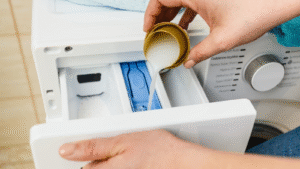
1. Enzyme laundry stain remover
Best for protein-based and many food stains, including blood, dairy, egg, grass, and some old organic marks. Check compatibility with wool, silk, and other delicate fibers because enzyme products are not suitable for every material.
2. Oxygen bleach or color-safe laundry booster
Useful for many washable whites and colorfast fabrics after pretreatment. It is not interchangeable with chlorine bleach, and “color-safe” still does not eliminate the need to read the label and spot-test.
3. White microfiber cloths
White cloths make it easier to track stain and dye transfer. Keep a stack specifically for cleaning so you are not tempted to rub with a colored towel or paper product that sheds.
4. Soft laundry brush
A soft brush can help work detergent into sturdy washable fabric with a gentle up-and-down motion. It is not the right tool for delicate weaves, velvet, silk, or surfaces that scratch easily.
5. Fabric-approved rust remover
Rust needs its own chemistry. Choose a remover specifically labeled for fabric, and follow the directions exactly. Do not use chlorine bleach on rust stains because it can intensify the discoloration.
6. Carpet or upholstery enzyme cleaner
This is especially useful in homes with pets or children. Match it to the carpet fiber or upholstery cleaning instructions, test for colorfastness, and avoid oversaturating padding or cushions.
7. Portable spot cleaner
A portable extractor can be worthwhile for frequent carpet, stair, car-seat, and upholstery spills. Choose one that fits your storage space and use only solutions approved by both the machine and the surface manufacturer.
How to Remove Stains From Clothes
The American Cleaning Institute’s stain guide recommends treating stains early, pretreating, laundering according to the fabric instructions, and repeating the treatment rather than machine-drying a remaining stain.
Blood
For fresh blood, rinse or soak the fabric in cold water. Hot water can set the protein. Pretreat with an enzyme product if it is safe for the fabric, launder according to the label, and air-dry to inspect. For dried blood, an enzyme soak may help, but old stains may require several rounds.
Grease and cooking oil
Blot excess oil and place the stained area face down on a clean absorbent towel when the fabric permits. Work liquid laundry detergent or a prewash stain remover into the back of the stain, wait as directed, and wash in the warmest water the care label allows. Air-dry before checking the result.
Coffee and tea
Flush the stain with cool water from the back. Pretreat with liquid detergent or a prewash stain remover. Wash according to the care label; a fabric-safe oxygen bleach may help with remaining discoloration. Coffee with milk or creamer is a combination stain, so an enzyme pretreatment may also be useful.
Red wine
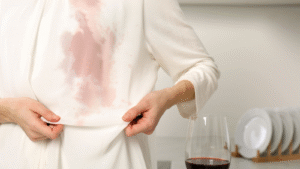
Blot immediately with a white cloth—do not scrub. Flush washable fabric from the back with cool water, apply a compatible laundry pretreatment, and wash as directed. Use oxygen bleach only when the care label and product label both allow it. Skip internet “hacks” that add several chemicals at once; you need a controlled, repeatable treatment.
Ink and marker
Place the stain face down on white paper towels or a washable white cloth. After spot-testing, apply a small amount of a fabric-compatible ink remover or rubbing alcohol from the back, replacing the absorbent layer as ink transfers. Rinse thoroughly and launder. Some permanent, felt-tip, and ballpoint inks cannot be fully removed.
Do not use acetone or nail-polish remover unless the garment and product labels permit it. Acetone can damage acetate and triacetate fabrics.
Grass
Apply an enzyme pretreatment if the fabric allows it, wait as directed, and launder. If green pigment remains, use only a bleach product that the care label identifies as safe. Avoid jumping straight to chlorine bleach on colored fabric.
Mud and dirt
Let mud dry, then brush or shake off as much loose soil as possible. Pretreat the remaining mark with liquid detergent; use an enzyme product for heavy organic soil when compatible. Wash as directed and inspect before drying.
Tomato sauce and ketchup
Lift away excess sauce without rubbing. Flush cool water through the back of washable fabric, then pretreat with liquid detergent or a stain remover. Because tomato sauce may also contain oil, repeat with an oil-focused pretreatment if an orange shadow remains.
Makeup and lipstick
Scrape away any solid or waxy excess. Pretreat washable fabric with liquid detergent or a product labeled for oily cosmetics. Blot rather than smear. Long-wear lipstick and waterproof makeup may require more than one treatment.
Sweat and deodorant
Check the label, then pretreat the underarm area with liquid detergent or an enzyme laundry product that is compatible with the fiber. Wash as directed. Yellowing may be a mix of body soil, product buildup, dye change, and fiber aging, so an old mark may improve without disappearing completely.
Rust
Use a rust remover specifically approved for fabric. Never apply chlorine bleach to a rust stain; it may make the discoloration worse. If the stain came from your water supply or washing machine, solve the source before treating more laundry.
Detergent or fabric-softener residue
Residue can look like blue, white, gray, or greasy streaks. Rewash according to the garment label without adding more of the product that caused the buildup. For a detailed troubleshooting process, read how to get detergent stains out of clothes.
If residue keeps returning, review your dose, load size, cycle, and machine settings. Our guide to washing-machine soil levels can help you match the cycle to the load.
Old or set-in stains
Old stains need patience, not an uncontrolled chemical cocktail. Identify the likely stain, pretreat with a compatible product, allow the label-directed soak time, rinse, and repeat. Stop if the fabric loses color or strength. A stain that has been ironed or repeatedly machine-dried may be permanent.
How to Remove Stains From Carpet
Carpet holds both the spill and the cleaning liquid, so controlling moisture matters.
- Lift solids and blot liquid with a clean white cloth.
- Check the carpet manufacturer’s care instructions and warranty conditions.
- Spot-test a carpet-approved solution in a hidden area.
- Apply a small amount—do not flood the backing or pad.
- Work from the edge toward the center, blotting with fresh sections of cloth.
- Rinse or extract only as the product directs, then dry the area thoroughly.
For a stain-specific method, consult the Carpet and Rug Institute’s Spot Solver, which provides guidance by spot type. Call a professional for large spills, valuable rugs, recurring odor, color bleeding, or moisture that reached the padding.
Pet urine on carpet
Blot as much moisture as possible, then use an enzyme cleaner specifically labeled for the carpet fiber and pet stains. Apply the amount and contact time on the label; oversaturating can spread contamination into the pad. Keep children and pets away until the product directions say the area is safe and fully dry.
Coffee, wine, and food on carpet
Blot first, then use a carpet-approved spot remover matched to the spill. Avoid scrubbing, which can untwist and fuzz carpet fibers. If a mark returns after drying, residue or moisture may remain deeper in the carpet and professional extraction may be the better next step.
How to Remove Stains From Upholstery
Look for the furniture manufacturer’s cleaning instructions before adding moisture or solvent. If the tag is missing, contact the manufacturer or test an inconspicuous area. Some upholstery must be cleaned with a water-based product, some with a solvent, and some only by vacuuming or a professional.
Blot the spill, use very little compatible cleaner, and avoid soaking the cushion. Work from the outside inward and dry with moving air. Stop if color transfers, the fabric develops rings, or the pile changes direction or texture. Velvet, silk, antique textiles, and valuable furniture are strong candidates for professional cleaning.
How to Remove Stains From a Mattress
Mattresses are difficult to rinse, so use minimal liquid.
- Remove and launder bedding according to its care label.
- Blot the mattress; do not push the spill deeper.
- Spot-test a small amount of a mattress- or upholstery-compatible cleaner.
- For protein-based stains, use a compatible enzyme product without soaking the foam.
- Blot away residue as the product directs.
- Run a fan and let the mattress dry completely before replacing bedding.
If liquid has penetrated deeply, odor returns, or mold is suspected, professional evaluation or replacement may be safer than repeatedly wetting the mattress.
How to Remove Stains From Hard Surfaces
Start with the mildest product suitable for the surface. The CDC notes that soap or detergent and water are enough for routine cleaning in many home situations; disinfecting is a separate task and is generally needed when illness or a higher-risk situation calls for it.
Kitchen grease
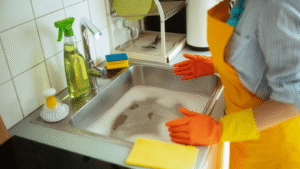
Use warm water with dish soap or a degreaser labeled for the surface. Give the product its directed time to loosen the film, then wipe with a nonabrasive cloth. On painted cabinets, wood, stainless steel, and appliances, check the manufacturer’s instructions before using a strong alkaline cleaner or abrasive pad.
Hard-water and mineral deposits
Use a cleaner approved for the fixture or surface. A mild acidic cleaner may work on some acid-resistant fixtures, but it can damage natural stone and certain finishes. For a fixture-specific method, see how to clean shower heads with vinegar.
Do not use vinegar or other acidic cleaners on marble. The Natural Stone Institute’s consumer guidance explains that acidic substances can etch marble. Use mild soap or a stone cleaner labeled for the material, and contact a stone professional for deep staining or etching.
Tile and grout
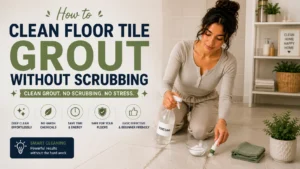
Remove loose soil, then use a cleaner approved for the tile and grout type. Avoid a wire brush or overly aggressive acid treatment that can damage grout or surrounding stone. For a detailed process, read how to clean floor tile grout without scrubbing.
Nonstick cookware
Let the pan cool, soak it with warm soapy water, and use a soft sponge. Abrasive powders, steel wool, and sharp scraping tools can damage the coating. See our guide to maintaining nonstick cookware for everyday care.
Air fryers and small appliances
Unplug the appliance and let it cool. Remove washable parts and follow the manufacturer’s instructions; do not immerse the electrical body. Our step-by-step air-fryer cleaning guide covers the basket, tray, interior, and heating-area precautions.
Wood
Blot immediately and use minimal moisture. Choose a cleaner made for the exact finish—not just “wood” in general. Dark water marks, lifted veneer, or a cloudy finish may require refinishing rather than more cleaning.
Electronics
Turn off and unplug the device when the manufacturer permits. Apply only a manufacturer-approved cleaner to the cloth, not directly to openings or the screen. Never improvise with bleach, window cleaner, or excess water.
Common Stain-Removal Mistakes
- Using hot water automatically. Heat helps some oily soil but can set fresh blood and other protein stains.
- Scrubbing carpet or upholstery. Friction spreads the spill and may permanently change the texture.
- Using chlorine bleach as a universal answer. It can remove color, weaken fibers, damage finishes, and worsen rust discoloration.
- Mixing cleaners. More chemistry does not mean more cleaning power. Never mix products or chemicals.
- Using vinegar everywhere. Vinegar is acidic and can etch marble and damage some finishes.
- Skipping the care label. A successful treatment on cotton may ruin wool, silk, acetate, or a specialty finish.
- Machine-drying too soon. The stain may look faint while wet and reappear after heat sets it.
- Oversaturating carpet, cushions, or mattresses. Trapped moisture can produce rings, odor, or other damage.
- Treating damage as dirt. Bleaching, etching, scorching, and finish loss need repair or restoration, not another stain remover.
When to Call a Professional
Professional cleaning or restoration is the smarter choice when:
- The item is dry-clean-only, antique, valuable, sentimental, silk, wool, velvet, leather, or suede.
- Carpet padding or furniture foam is soaked.
- Dye transfers to your cleaning cloth.
- The stain involves paint, a hazardous chemical, sewage, extensive mold, or an unknown substance.
- Stone is etched, wood finish has lifted, or a surface coating is failing.
- Repeated compatible treatments have not improved the mark.
- The manufacturer’s instructions prohibit do-it-yourself cleaning.
Frequently Asked Questions
There is no single product that safely removes every stain from every material. For washable clothing, liquid laundry detergent or a compatible prewash stain remover is a useful starting point. Enzyme products help with many protein and organic stains, while oil, ink, rust, and mineral deposits may need specialized treatments.
It depends on the stain and fabric. Use cold water for fresh blood and as a cautious first rinse for many unknown stains. Oily soil may respond better to the warmest water that the care label allows. Always let the stain type and care instructions decide.
No. Vinegar can damage acid-sensitive materials, including marble, and it is not a universal treatment for fabric, carpet, wood, electronics, or coated surfaces. Use it only when the item’s instructions and a tested method support it.
Do not assume two household products become safer or more effective when combined. Follow a product or manufacturer-approved method, and never mix commercial cleaners or chemicals. If a method calls for separate steps, rinse as directed between them.
Identify the stain, gently remove dry residue, pretreat with a compatible product, allow the directed soak time, and repeat before using heat. Old stains may improve without disappearing, especially after prior machine-drying or ironing.
Dryer heat can set remaining stain material into fibers. Air-drying lets you inspect the area and repeat treatment before adding heat.
Only when both the bleach label and the item’s care instructions allow it. Chlorine bleach is not safe for every color, fiber, or surface, and it should not be used on rust stains. Oxygen bleach is different but still requires compatibility checks.
Treat the stain type first rather than reaching immediately for bleach. Pretreat, wash according to the care label, and use a compatible whitening product only if permitted. Some “white” garments contain fibers, finishes, trims, or thread that chlorine bleach can damage.
Only if the product label and the upholstery manufacturer both approve it. Carpet and upholstery may use different fibers, dyes, backings, adhesives, and cleaning methods.
Stop escalating once the material begins to change or repeated compatible treatment produces no improvement. Some ink, dried paint, dye transfer, old mildew, and heat-set stains are permanent. A professional may be able to improve the result or confirm that repair, recoloring, or replacement is the realistic option.
Final Takeaway
The safest way to learn how to remove stains is to think in this order: material first, stain second, cleaner third. Act quickly, blot instead of scrub, follow the care and product labels, and keep heat away until the mark is gone. A small, well-chosen stain kit will solve more problems than a shelf of random products—and it will help you avoid turning a treatable spill into permanent damage.
AFFILIATE LINK PLACEHOLDER • Add Amazon SiteStripe link to a curated stain-removal essentials list
Build your stain-removal kit: compare practical cleaning essentials on Amazon