To clean an air fryer safely, unplug it, allow it to cool completely and remove the basket, crisper plate and any other washable accessories. Wash compatible removable parts with warm water, mild dish soap and a soft, nonabrasive sponge. Wipe the appliance body with a lightly damp cloth, never immerse the electrical unit in water, and check the model’s manual before cleaning the heating element or placing parts in a dishwasher.
Regular cleaning prevents old grease, crumbs and cooking odors from carrying into the next meal. It can also reduce the smoke caused by food residue touching hot surfaces. The exact instructions vary between basket-style fryers, dual-basket models and air-fryer ovens, so the owner’s manual always takes priority over general advice.
If you use a Ninja model, our Ninja air fryer cleaning guide explains the additional model-specific checks to make before washing removable components.
Quick cleaning schedule
| When | What to do |
| After each use | Remove crumbs and wash or wipe the basket, crisper plate and drawer once they have cooled. |
| When grease is visible | Soak compatible removable parts in warm, soapy water before gently cleaning them. |
| When the appliance smells or smokes | Inspect the basket, drawer, interior surfaces and accessible areas identified in the manual. |
| Occasionally | Check vents, seals, feet and exterior surfaces for dust or grease without introducing water into electrical openings. |
What you need
- Mild dish soap
- Warm water
- A soft, nonabrasive sponge
- A microfiber cloth
- A soft-bristle brush for corners and mesh
- A clean towel or drying rack
- Your air fryer manual or manufacturer support page
How to clean an air fryer after normal use
- Unplug the appliance and let it cool: Disconnect the air fryer from power and wait until the basket, drawer and interior are safe to handle. Do not begin while the unit is hot.
- Remove washable components: Take out the basket, crisper plate, rack, divider and other detachable accessories. Empty crumbs into the trash and dispose of collected grease without pouring it down the sink.
- Check the manual: Confirm which parts may be submerged and whether they are dishwasher-safe. Dishwasher guidance can differ even between models from the same brand.
- Soak greasy parts: Place compatible removable parts in warm water with a small amount of mild dish soap. A 10- to 15-minute soak is a useful starting point for ordinary grease.
- Clean gently: Use a soft sponge on broad surfaces and a soft-bristle brush around mesh, corners and grooves. Avoid steel wool, metal utensils and abrasive powders that can scratch nonstick coatings.
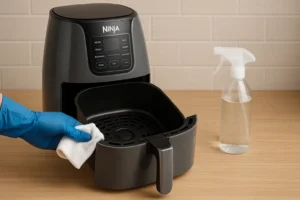
- Wipe the main unit: Use a lightly damp cloth on the exterior and accessible interior surfaces. Do not immerse the base, pour water into it or spray cleaner toward vents, controls or electrical components.
- Rinse and dry: Rinse hand-washed components until no soap remains. Allow every part to dry completely before reassembly and use.
How to remove baked-on grease safely
Use the mildest method first. Strong chemicals and aggressive scrubbing may remove grease quickly but can also damage coatings, discolor metal or leave residue on food-contact surfaces.
- Soak the removable part in warm, soapy water for 10 to 15 minutes.
- Wipe the loosened residue with a nonabrasive sponge.
- Repeat the soak rather than increasing scrubbing pressure.
- If the manual permits it, apply a small baking-soda-and-water paste only to the stubborn spot.
- Test any paste or cleaner on a small, inconspicuous area first.
- Rinse thoroughly and allow the part to dry completely.
Do not automatically use oven cleaner, bleach, steel wool, dishwasher tablets, concentrated degreaser or mixed household chemicals. If mild cleaning does not work, consult the manufacturer before trying a stronger product.
For tools that help with routine maintenance, compare the genuinely useful options in our best air fryer accessories guide rather than buying a large universal accessory kit.
How to clean the air fryer interior
Once the appliance is unplugged and cool, remove the basket or trays so you can see the interior. Use a soft, lightly damp cloth to collect crumbs and wipe accessible grease. The cloth should be damp rather than dripping. Follow with a clean damp cloth if soap was used, then let the compartment dry with the appliance unplugged.
Never pour water into the appliance body. Do not spray cleaning solution directly inside, and do not allow liquid to enter controls, vents, fan openings or electrical connections.
How to clean the heating element safely
Heating-element instructions are model-specific. Some manufacturers provide a method for cleaning an accessible element with a soft sponge or brush after the appliance is unplugged and cool. Other manufacturers advise users not to touch the element. Check the exact model manual before proceeding.
If the manual permits cleaning, use the recommended position, tool and amount of moisture. Never use a wire brush, bend the element, force a tool behind it or spray cleaner directly onto it. Contact the manufacturer if residue is inaccessible or the appliance continues to smoke after normal cleaning.
Basket-style vs. oven-style air fryers
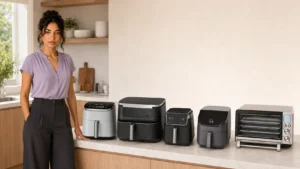
Basket-style air fryers
Focus on the basket, crisper plate and outer drawer where grease collects. Inspect silicone feet and small grooves carefully, because food particles can hide around them. Confirm whether the pieces separate before attempting to remove anything.
Dual-basket air fryers
Wash both drawers, plates and any divider separately. Parts that look identical may still have a designated side, so keep track of their original positions.
Air-fryer ovens
Remove racks, trays and the crumb tray according to the manual. Wipe the door and interior using only products approved for that surface. Do not assume a cleaner that is safe for glass is safe for the surrounding coating.
Are air fryer parts dishwasher-safe?
Some baskets and crisper plates are dishwasher-safe, while others are hand-wash only. Even within one product family, instructions can differ by model and component. Check the manual or official support page before using the dishwasher.
Hand washing with mild soap and a soft sponge is often the more conservative option for preserving a nonstick finish. If the manufacturer approves dishwasher cleaning, follow any rack-position and detergent instructions it provides.
How often should you clean an air fryer?
Remove crumbs and food residue after every use. Wash greasy food-contact components after cooking oily, breaded, marinated or strongly flavored foods. A lightly used basket may only need a quick wash, while bacon, chicken wings and fatty meat usually require more thorough cleaning.
Inspect the interior whenever you notice visible splatter, smoke or an old-food odor. Deep-cleaning frequency depends on what you cook, how often you use the appliance and the manufacturer’s maintenance schedule.
Air fryer cleaning methods to avoid
- Do not operate the air fryer with soapy water or cleaning solution inside.
- Do not immerse the appliance base or power cord.
- Do not pour water directly into the electrical unit.
- Do not use steel wool, metal scrapers or harsh abrasive pads on coated parts.
- Do not spray cleaner into vents, controls or fan openings.
- Do not assume every removable part is dishwasher-safe.
- Do not clean the heating element without model-specific instructions.
- Do not mix vinegar, bleach, ammonia, peroxide or other household chemicals.
- Do not reassemble or operate the appliance while components are wet.
Before covering the basket, read our comparison of foil, parchment and silicone in an air fryer so airflow is not blocked and lightweight material cannot reach the heating element.
Why does a clean air fryer still smell or smoke?
Old grease remains in a hidden area
Inspect the drawer edges, crisper-plate feet, tray channels and other removable areas. For inaccessible residue near the fan or element, follow the manual or contact support rather than dismantling the appliance.
The current food is producing smoke
Fatty foods may release grease that becomes hot enough to smoke. Stop cooking if smoke is excessive, disconnect the appliance safely and follow the manufacturer’s troubleshooting instructions.
The appliance is new
Some new appliances have an initial manufacturing odor. Wash removable components and follow the first-use procedure in the manual. Stop using the product and contact the manufacturer if the smell is electrical, burning or persistent.
Helpful nonabrasive cleaning tools
A few simple tools can make routine cleaning easier without risking the appliance’s finish:
- Soft nonabrasive sponges
- Small soft-bristle brushes
- Microfiber cloths
- Manufacturer-compatible silicone liners
If a compatible liner suits the foods you cook, see our research-based picks for the best reusable air fryer liners. A liner can reduce drips, but it does not replace regular basket cleaning.

- NINE SCRUBBING SPONGES: This pack of Scotch-Brite Zero Scratch Scrub Sponges includes 9 sponges
- 3X STRONGER.* 3X LONGER LASTING.*: Compared to the national leading value brand, Scotch-Brite delivers triple the durabi…
- ZERO SCRATCH, ALL CLEAN: Safe on non-stick cookware, glassware, and more—cleans tough messes without leaving a single sc…
Frequently asked questions
Can I put water and dish soap in an air fryer and turn it on?
No. Do not operate an air fryer with soapy water or cleaning solution inside unless the manufacturer of that exact model explicitly instructs you to do so. Unplug the appliance and clean compatible removable parts in the sink instead.
Can I use baking soda to clean an air fryer?
A mild baking-soda-and-water paste may help on some compatible removable surfaces, but check the manual first and test a small area. Avoid forcing abrasive paste into vents, seams or electrical areas.
Can I use vinegar inside an air fryer?
Do not spray vinegar into the electrical unit. Some manufacturers may allow a diluted solution on particular removable or glass components, but surface compatibility varies. Mild dish soap and warm water are the safer general starting point.
Can an air fryer basket go in the dishwasher?
Only when the manual identifies that exact basket or component as dishwasher-safe. Different models and components can have different instructions.
How do I clean an air fryer heating element?
Unplug the appliance, allow it to cool and consult the exact model manual. If cleaning is permitted, use only the tool and method specified by the manufacturer.
How often should I wash the basket?
Remove residue after every use and wash the basket after greasy, breaded, marinated or strongly flavored foods. Frequent light cleaning prevents stubborn buildup.
Why is my air fryer smoking after cleaning?
Possible causes include grease near the heating area, residue in a hidden channel, moisture, or smoke produced by the food currently cooking. Turn the appliance off if smoke is excessive and follow the manufacturer’s troubleshooting guidance.
Final cleaning checklist
- Appliance unplugged and cool
- Manual checked for model-specific instructions
- Basket and accessories cleaned without abrasives
- Main unit never submerged or sprayed
- No soap or cleaner left on food-contact surfaces
- All components completely dry
- Air fryer reassembled correctly
The safest air-fryer cleaning routine is simple: unplug, cool, separate, wash compatible parts gently, wipe the electrical unit carefully and dry everything completely. Avoid viral shortcuts that involve running cleaning solution inside the appliance, and let the manual decide what is safe for the dishwasher and heating element.
If you are replacing an older unit rather than cleaning it, compare capacity and basket style in our guide to the best air fryer for a family of four.