
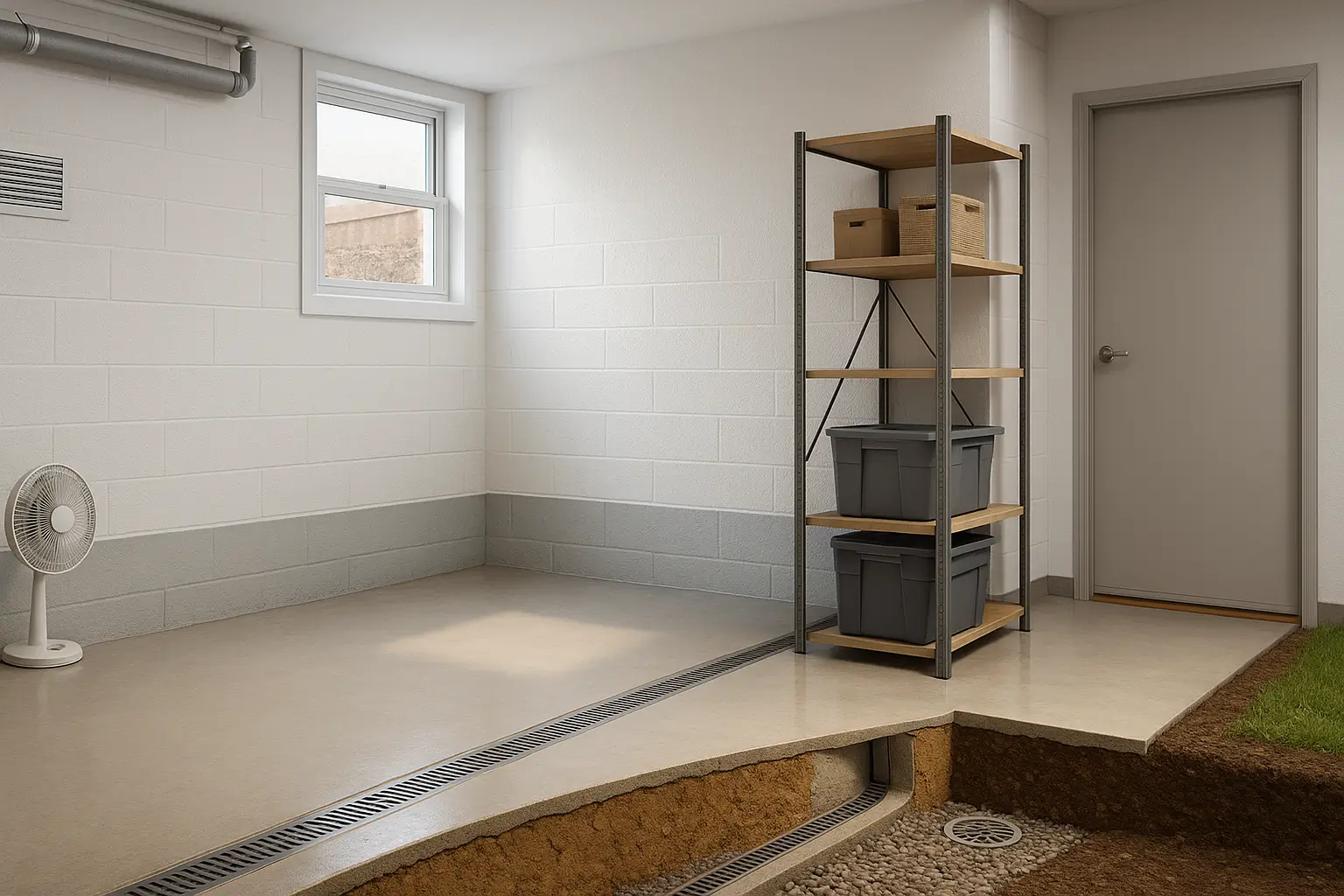
Dealing with basement moisture can feel overwhelming, especially when you don’t want to invest in an expensive dehumidifier or deal with rising energy costs. The good news? You can effectively control basement humidity and prevent dampness using natural methods and smart home improvements that address the root causes of moisture problems.
In this comprehensive guide, I’ll share proven techniques I’ve tested over my decade of experience helping homeowners How to Keep Basement Dry Without Dehumidifier.
Understanding Why Basements Get Wet
Before diving into solutions, it’s crucial to understand what causes basement dampness. Most basement moisture issues stem from four primary sources:
Poor drainage and water seepage through foundation walls create persistent dampness. When rainwater doesn’t drain away from your home properly, it saturates the soil around your foundation, eventually finding its way through microscopic cracks and porous concrete.
Condensation on cold surfaces occurs when warm, humid air meets cool basement walls and floors. This is particularly common during summer months when outdoor humidity levels rise.
Plumbing leaks and HVAC condensation often go unnoticed in basements until significant moisture damage appears. Even small drips can create ongoing humidity problems.
Inadequate ventilation traps moisture inside your basement, preventing natural evaporation and creating the perfect environment for mold growth and musty odors.
12 Way How to Keep Basement Dry Without Dehumidifier
1. Improve Basement Ventilation Naturally
Proper air circulation is your first line of defense against basement humidity. Opening basement windows on dry, low-humidity days allows fresh air to circulate and carry moisture outdoors. Install window fans to create cross-ventilation, positioning one fan to pull fresh air in and another to push stale, humid air out.
For basements without windows, consider installing passive vents that allow continuous air exchange. These vents work without electricity, using natural pressure differences to move air. You can also run ceiling fans year-round to prevent air stagnation, which contributes to condensation on cold surfaces.
Strategic ventilation reduces relative humidity naturally without consuming energy or requiring expensive equipment. Monitor outdoor humidity levels using a hygrometer before ventilating to ensure you’re bringing in drier air than what’s already inside.
2. Fix Exterior Drainage Problems
Water management around your home’s foundation is critical for basement moisture control. Start by inspecting and cleaning your gutters and downspouts seasonally. Clogged gutters overflow during rainstorms, directing thousands of gallons of water directly against your foundation walls.
Extend downspouts at least 6-10 feet away from your foundation using downspout extensions or underground drainage pipes. This simple modification prevents water from saturating the soil around your basement walls.
Grade your yard so soil slopes away from your foundation at a minimum rate of 6 inches over the first 10 feet. This prevents water from pooling against your home during heavy rainfall. Fill low spots near your foundation with compacted soil and consider installing a French drain system for severe drainage issues.
Many homeowners also benefit from installing window well covers to keep rainwater from entering basement window wells. These affordable covers prevent flooding while still allowing natural light into your basement.
3. Seal Foundation Cracks and Gaps
Even tiny foundation cracks allow groundwater and humid air to enter your basement. Inspect your foundation walls both inside and outside for hairline cracks, gaps around utility penetrations, and deteriorating mortar joints.
Use hydraulic cement for active water leaks and flexible polyurethane caulk for smaller cracks. For extensive cracking, consider applying a waterproof coating to interior foundation walls. Products like Drylok create an impermeable barrier that prevents moisture transmission through concrete.
Pay special attention to the joint where your basement floor meets the walls, known as the cove joint. This common entry point for water can be sealed with hydraulic cement or specialized cove joint sealant.
Don’t forget to seal around basement windows, doors, and any pipes or wires entering through foundation walls. Expanding foam sealant works well for larger gaps around utilities.
4. Use Moisture-Absorbing Materials
Natural desiccants absorb excess moisture from basement air without electricity. Calcium chloride, available as DampRid or similar products, effectively reduces humidity in enclosed spaces like closets, storage areas, and smaller basements.
Place moisture absorbers strategically throughout your basement, focusing on problem areas like corners, under stairs, and near suspected moisture sources. Replace or recharge these products according to manufacturer instructions, typically every 2-3 months depending on humidity levels.
For larger spaces, consider using silica gel packets in storage bins and containers to protect stored items from moisture damage. Activated charcoal bags also absorb moisture while eliminating musty odors naturally.
Some homeowners create DIY moisture absorbers using rock salt in perforated containers. While less aesthetically pleasing than commercial products, rock salt provides an economical solution for large basements.
5. Install Proper Basement Insulation
Insulating your basement reduces condensation by warming interior surfaces above the dew point. When basement walls remain cold, warm humid air condenses on them, creating water droplets and persistent dampness.
Rigid foam insulation boards installed against foundation walls prevent this condensation while providing excellent moisture resistance. Unlike fiberglass insulation, rigid foam doesn’t absorb water and won’t promote mold growth if it gets wet.
Insulate basement pipes, especially cold water lines, with foam pipe insulation to prevent condensation dripping onto basement floors. This simple step eliminates a common source of ongoing moisture problems, much like maintaining proper conditions for kitchen appliances prevents issues.
Consider insulating your basement ceiling if you have a consistently cold basement floor above unheated spaces. This prevents cold surfaces that attract condensation during humid months.
6. Implement Strategic Air Circulation
Moving air prevents moisture from settling and condensing on surfaces. Use multiple box fans or oscillating fans to create air movement throughout your basement. Position fans to circulate air across problem areas, breaking up pockets of stagnant, humid air.
Install a whole-house fan if you have one, and use it during cooler evenings to exchange basement air with fresh outdoor air. This passive cooling technique also helps reduce cooling costs while managing humidity.
Battery-operated or solar-powered fans offer flexibility for basements with limited electrical outlets. Place these portable fans near moisture-prone areas like sump pump basins, basement bathrooms, or laundry areas.
Ceiling fans set to run continuously on low speed prevent air stratification, where humid air settles in the basement while drier air rises to upper floors. This constant circulation promotes even moisture distribution and faster natural evaporation.
7. Control Indoor Moisture Sources
Many basement humidity problems originate from moisture-generating activities within the home. Vent your clothes dryer outdoors properly, ensuring the vent duct is clean, short, and free of kinks that restrict airflow. Even small amounts of lint buildup significantly reduce dryer efficiency, releasing more moisture indoors.
If you have a basement bathroom, always use the exhaust fan during and for 20-30 minutes after showers. Inadequate bathroom ventilation creates excessive humidity that spreads throughout your basement. Similar to how you maintain appliances, regular maintenance of exhaust systems is essential.
Avoid drying clothes on indoor racks in your basement. While convenient, this practice releases several gallons of water into basement air over several hours. Use outdoor clotheslines or dry clothes in upper-level rooms with better ventilation.
Cover your washing machine between uses if it’s located in your basement. This prevents moisture from evaporating from damp clothes left in the machine and helps maintain lower humidity levels.
8. Install Window Well Covers and Barriers
Basement windows often contribute significant moisture through leaky seals, condensation, and water intrusion during storms. Install high-quality polycarbonate window well covers over all basement window wells to keep rainwater and snow out while allowing natural light penetration.
Replace old, deteriorating window seals with fresh weatherstripping to prevent humid outdoor air from entering during summer months. This simple upgrade dramatically reduces condensation on window glass and surrounding walls.
Add a layer of gravel at the bottom of window wells to improve drainage. This prevents water from pooling against basement windows during heavy rainfall. Install window well drains if standing water regularly accumulates despite gravel.
Consider applying insulating window film to single-pane basement windows. This reduces the temperature difference between indoor and outdoor surfaces, minimizing condensation formation while improving energy efficiency.
9. Utilize Plants That Absorb Moisture
Certain houseplants naturally absorb moisture from the air through their leaves and roots. While they won’t replace a dehumidifier for severe humidity problems, they complement other moisture control strategies effectively.
Boston ferns, peace lilies, and English ivy thrive in humid basement conditions while pulling moisture from the air. Position these plants strategically in areas where humidity tends to be highest. Understanding plant care requirements helps ensure they remain healthy moisture absorbers.
Spider plants and orchids also perform well in basement environments and require minimal care. These plants not only reduce humidity but improve air quality by filtering airborne contaminants.
Remember that plants require adequate light to photosynthesize and absorb moisture effectively. Supplement natural light with grow lights if your basement receives insufficient natural illumination. Overwatering these plants defeats their moisture-absorbing purpose, so water only when soil feels dry to the touch.
10. Apply Waterproof Coatings to Walls and Floors
Interior waterproofing creates a moisture barrier that prevents dampness from penetrating into your living space. Clean basement walls thoroughly before applying waterproof paint or coating to ensure proper adhesion.
Drylok and similar masonry waterproofers provide excellent protection against moisture transmission through concrete and block foundations. Apply two coats for maximum effectiveness, following manufacturer instructions carefully regarding drying time between coats.
For basement floors, consider applying an epoxy coating that seals concrete and prevents moisture vapor transmission from below. These durable coatings also make floors easier to clean and maintain, similar to how proper maintenance extends the life of other surfaces.
Don’t waterproof over active water leaks or significant moisture problems without first addressing the source. Waterproof coatings work best as preventive measures in combination with proper drainage and ventilation.
11. Install and Maintain Your Sump Pump System
A properly functioning sump pump system removes groundwater before it can create basement moisture problems. Check your sump pump monthly by pouring water into the pit to ensure it activates and pumps water outdoors effectively.
Install a battery backup system to keep your sump pump operational during power outages, which often coincide with heavy storms when pumping is most critical. Clean the sump pit annually, removing accumulated sediment that can affect pump performance.
Ensure your sump pump discharge line extends at least 10-15 feet from your foundation and drains to a location where water flows away from your home. Many local codes prohibit connecting sump pumps to sewer systems, as this can overload municipal treatment facilities.
Consider installing a sump pump cover to reduce humidity from water sitting in the open pit while preventing debris from entering. Some covers also reduce the noise of pump operation and prevent odors.
12. Monitor and Control Relative Humidity Levels
Understanding basement humidity levels helps you gauge the effectiveness of your moisture control efforts. Purchase an accurate digital hygrometer to track relative humidity throughout your basement. Ideal basement humidity ranges between 30-50% year-round.
Take readings at multiple locations and times of day, as humidity varies significantly in different areas. Morning readings often reveal the highest humidity levels before daily temperature increases promote natural evaporation.
Create a simple log tracking basement humidity over time to identify patterns and problem areas. This data helps you determine which moisture control strategies work best for your specific situation.
If humidity consistently exceeds 60% despite implementing these methods, you may have significant hidden moisture sources requiring professional assessment. Persistent high humidity promotes mold growth and structural damage that can be costly to remediate.
Additional Tips for Basement Moisture Control
Reduce stored items in your basement to improve air circulation. Overcrowded basements trap humid air and create pockets where moisture accumulates. Store items off the floor on metal or plastic shelving to prevent water damage if minor flooding occurs, similar to proper storage solutions for other items.
Keep basement doors open to upper levels when possible to promote air exchange with drier areas of your home. This simple habit helps equalize humidity throughout your house.
Schedule professional inspections of your HVAC system to ensure condensate drains aren’t blocked and that your furnace or air conditioner isn’t contributing to basement moisture. Leaking HVAC systems can introduce significant moisture without obvious signs.
Consider installing a vapor barrier over exposed dirt in crawl spaces connected to your basement. This polyethylene sheeting prevents ground moisture from evaporating into your basement space.
When to Consider Professional Help
While these DIY methods effectively manage basement moisture in many situations, some problems require professional intervention. Contact a basement waterproofing specialist if you notice:
- Water actively flowing through foundation walls during or after rain
- Horizontal or stair-step cracks in foundation walls wider than 1/4 inch
- Bowing or buckling foundation walls indicating structural issues
- Persistent musty odors despite implementing moisture control measures
- Visible mold growth covering more than 10 square feet
- Repeatedly wet or damp basement floors without obvious water source
Professional waterproofing contractors can install exterior drainage systems, interior drain tile, or sump pump systems that address severe moisture problems beyond the scope of DIY solutions.
Long-Term Maintenance for a Dry Basement
Maintaining a dry basement requires ongoing attention to prevent moisture problems from returning. Establish a seasonal maintenance schedule that includes:
Spring: Clean gutters and downspouts, inspect foundation for winter damage, test sump pump operation, check basement for water intrusion during heavy rains.
Summer: Monitor humidity levels, increase ventilation on dry days, inspect and recharge moisture absorbers, trim vegetation around foundation.
Fall: Clean gutters again, check grading around foundation, inspect and seal foundation cracks before winter, ensure downspouts aren’t frozen or blocked.
Winter: Monitor for ice dams that can cause water infiltration, check that exhaust fans operate properly, maintain consistent basement temperatures to reduce condensation.
Keep detailed records of moisture control efforts, including dates when you replaced moisture absorbers, sealed cracks, or completed other maintenance tasks. This documentation helps identify patterns and effectiveness of various strategies.
Conclusion: Creating Your Dry Basement Strategy
Keeping your basement dry without a dehumidifier is entirely achievable using a combination of these proven methods. Start by addressing the primary moisture sources in your situation, whether that’s poor exterior drainage, inadequate ventilation, or interior moisture generation.
Remember that effective basement moisture control typically requires multiple complementary strategies rather than relying on a single solution. Monitor your results using a hygrometer and adjust your approach based on what works best for your specific basement conditions.
By implementing these techniques and maintaining consistent attention to moisture control, you’ll create a dry, healthy basement environment without the ongoing expense and energy consumption of running a dehumidifier year-round. Your basement can become valuable living or storage space rather than a damp, musty problem area.
Take action today by identifying the two or three methods most applicable to your situation and begin implementation. The investment of time and modest expense will pay dividends through improved air quality, reduced mold risk, and protection of your home’s structural integrity for years to come.