
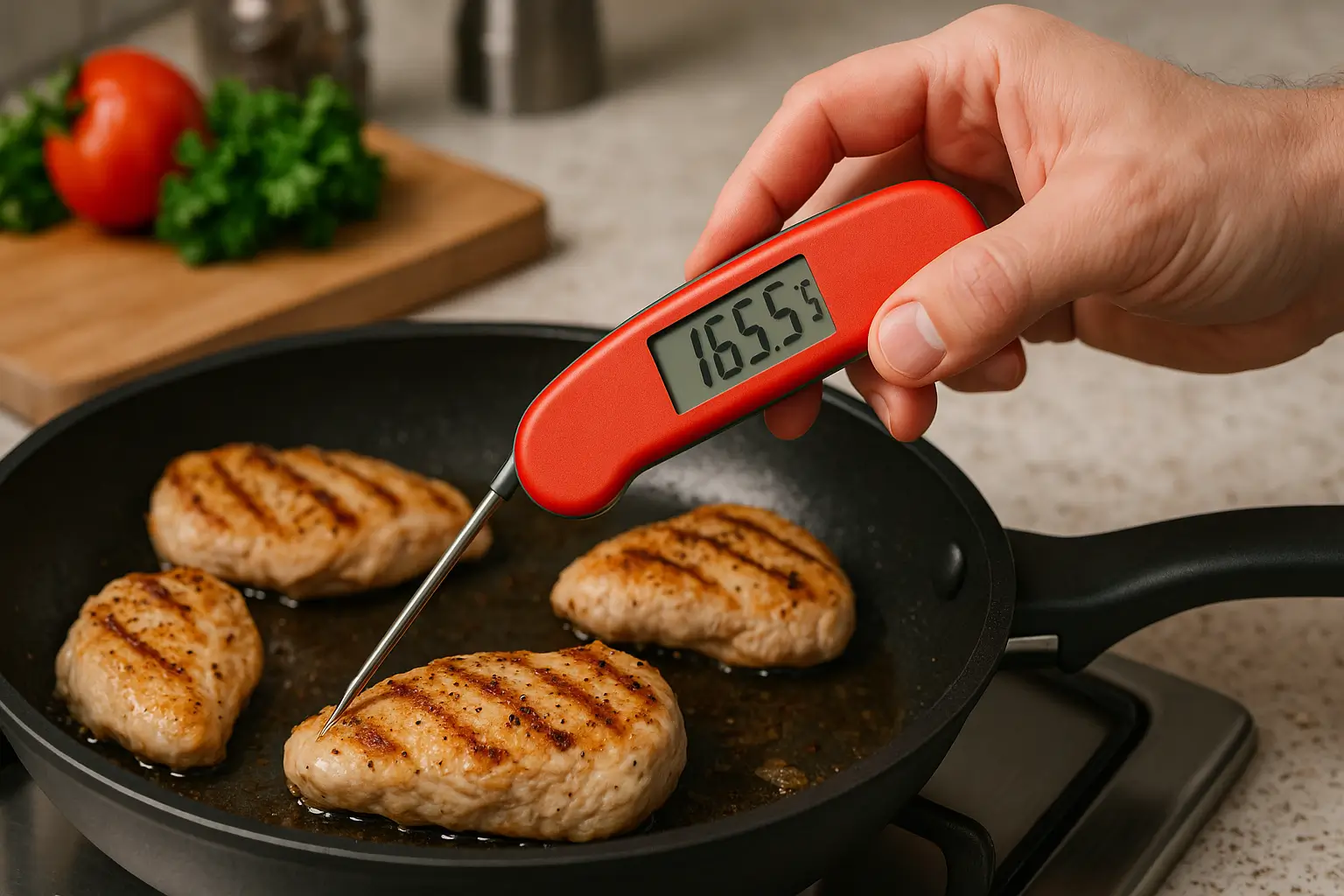
If you’ve ever cut into a steak only to find it’s overcooked, or worse, served undercooked chicken to your family, you know the anxiety of guessing when food is done. I learned this lesson the hard way during my first Thanksgiving hosting duties when my turkey was simultaneously dry on the outside and questionable on the inside. That disaster sent me on a mission to find the best food thermometer, and I haven’t looked back since.
After years of testing thermometers in my kitchen and talking with fellow home cooks, I’ve put together this comprehensive guide to help you choose the perfect temperature tool for your cooking style. Whether you’re grilling steaks, smoking brisket, or roasting your holiday turkey, the right thermometer takes the guesswork out of cooking.
Why Every Kitchen Needs a Reliable Food Thermometer
Let’s be honest cooking temperatures matter more than most of us want to admit. The USDA has specific guidelines for safe food temperatures, and hitting those marks means the difference between delicious, safe meals and potential foodborne illness. But beyond safety, a good cooking thermometer with probe helps you achieve that perfect medium-rare steak or juicy roast chicken every single time.
I used to rely on the “poke test” for steaks and cooking times for roasts. My success rate? Maybe 60%. Now with a reliable thermometer? I nail it every time. That consistency alone makes these devices worth every penny.
Understanding Different Types of Food Thermometers
Before we dive into specific recommendations, let’s break down what’s actually available. Not all thermometers are created equal, and knowing the differences helps you choose wisely.
Instant-Read Digital Thermometers
These are the workhorses of most kitchens. You insert the probe into your food, wait a few seconds, and get an accurate reading. The best digital meat thermometer models read temperatures in under three seconds. They’re perfect for checking steaks on the grill, testing chicken breasts, or verifying that your burgers have hit safe temperatures.
I keep mine right next to my stove because I reach for it constantly. From checking if my pasta water is actually boiling to testing whether my caramel has reached the right temperature, it’s my most-used kitchen tool after my chef’s knife.
Probe Thermometers with Cables
If you’re wondering where to buy meat thermometer options for long cooking sessions, probe-style units are your answer. These consist of a heat-resistant probe connected by a cable to a digital display unit that stays outside your oven or grill.
The beauty of these is that you can monitor your food’s internal temperature without opening the oven door. I use mine religiously for roasts, and it’s absolutely essential when I’m smoking meat for hours. No more heat loss from constantly checking, and you can often set temperature alarms so you know exactly when your food is ready.
Oven-Safe Leave-In Thermometers
An ovenproof meat thermometer stays in your food throughout the entire cooking process. Traditional dial thermometers fall into this category, as do some modern digital versions. These work great when you’re roasting and want continuous temperature monitoring.
Best Dial Thermometer: CDN ProAccurate – Old school but effective. The large 2-inch dial is easy to read through your oven window, and it’s accurate to within 2 degrees. The stainless steel construction means it’ll last for decades. I’ve had mine for eight years and it’s still perfectly calibrated.
Budget Pick: Alpha Grillers Instant Read – Dual temperature readings (Fahrenheit and Celsius), stays accurate up to 550°F, and costs less than a pizza delivery. The shatterproof lens means you can drop it (ask me how I know) and it keeps working.
The best oven going meat thermometer models have both the probe and display unit designed to withstand high heat. I’ll be honest though—I prefer the cable probe style because I can read the temperature without opening my oven.
Infrared Thermometers
These are less common for cooking meat but worth mentioning. They measure surface temperature from a distance. While they’re not ideal as a meat thermometer beef tool (you need internal temps for meat), they’re fantastic for checking griddle temperatures or if your pizza stone is hot enough.
What Makes the Best Meat Thermometer? Key Features to Consider
After testing probably two dozen thermometers over the years, I’ve learned what features actually matter versus what’s just marketing fluff.
Speed and Accuracy: The best rated digital meat thermometer reads quickly (under 4 seconds) and accurately (within 1-2 degrees). When you’re grilling and trying to keep heat in, speed matters. I’ve used cheap thermometers that took 15-20 seconds to stabilize—that’s an eternity when you’re working with high heat.
Temperature Range: Make sure your thermometer can handle both low temps for candy making and high temps for deep frying. A range of -40°F to 450°F covers most home cooking needs. If you’re into smoking, you’ll want something that reads accurately at lower temperatures. For grilling, you need reliability at the high end.
Probe Length: A long meat thermometer (at least 4-5 inches) is essential for thick roasts, turkeys, and large cuts. Short probes are fine for steaks and chicken breasts, but when you’re dealing with a meat thermometer for prime rib, you need length to reach the center without burning your hands.
Display Quality: Can you read it easily? I’ve owned thermometers with tiny displays that were impossible to read in dim kitchen lighting or bright outdoor sun. The best models have large, backlit displays that swivel or rotate.
Water Resistance: Cooking is messy. Your thermometer will get splattered, potentially submerged when washing. Look for IPX4 rating or higher. I’ve killed two thermometers by accidentally getting water in the battery compartment before learning this lesson.
Build Quality: Is the probe sturdy? Does the housing feel solid? The best affordable meat thermometer options often skimp here, but if you’re careful, they’ll still last years. Premium models feel substantial and are built to take abuse.
Best Food Thermometer Recommendations for Different Cooking Styles
Now let’s get to the good stuff what actually works in real kitchens.
For Everyday Cooking and Grilling
If you want one thermometer that does everything reasonably well, a quality instant-read digital is your best bet. The best digital food thermometer models fold up for easy storage, have fast reading speeds, and handle the temperature range for most cooking tasks.
Top Pick: ThermoPro TP19 – This is my go-to recommendation for most home cooks. It reads temperatures in 2-3 seconds, has a rotating display that’s easy to read from any angle, and the price sits in that sweet spot where you’re getting premium features without the premium price tag. The backlit screen is a game-changer when you’re grilling at night, and the IP65 waterproof rating means you can rinse it right under the tap.
Premium Option: ThermoWorks Thermapen ONE – If you’re serious about cooking and want the absolute best, this is it. Sub-1-second reading speeds, incredibly accurate, and built like a tank. Yes, it’s pricey, but after five years of daily use, mine still works like day one. The one-handed operation is brilliant when you’re juggling tongs and a spatula.
I reach for my instant-read several times during every dinner prep. It’s perfect as a meat thermometer for grilling steaks—just pull your steak off the grill, insert the probe into the thickest part, and you’ll know in seconds if you’ve hit that perfect 130°F for medium-rare. Same goes for using it as a meat thermometer for burgers, where you want to ensure that 160°F safe temperature.
For chicken breasts, fish, and pork chops, instant-reads are ideal. They’re also surprisingly useful for non-meat applications—testing oil temperature for frying, checking if your bread dough is in the right temp range for proofing, or making sure your coffee isn’t scalding hot.
For Roasting and Turkey
Thanksgiving taught me that the best turkey thermometer isn’t necessarily the most expensive—it’s the one that lets you monitor without opening the oven constantly. A probe thermometer with a cable that runs outside the oven is game-changing.
Best Value: ThermoPro TP20 – This dual-probe wireless thermometer has saved countless holiday dinners in my kitchen. One probe monitors the turkey, the other tracks the oven temperature. The wireless receiver has a 300-foot range, so you can actually enjoy time with family instead of hovering by the oven. The preset temperatures for different meats take the guesswork out completely.
Runner-Up: Inkbird Wireless Meat Thermometer – Similar features to the ThermoPro but with a rechargeable battery instead of disposables. The magnetic back sticks to your oven, and the alarm is loud enough to hear from another room but not so loud it scares the dog.
You insert the probe into the thickest part of the turkey breast, run the cable out the oven door, and monitor the temperature on the counter unit. Most models let you set target temperatures and alarms. When that turkey hits 165°F, you know it’s done—no guessing, no dry meat from overcooking.
The same setup works brilliantly as the best meat thermometer for prime rib. You can monitor the internal temperature as it slowly climbs, pulling it out at exactly 125°F for a perfect medium-rare after resting. The precision is honestly incredible compared to the timer-and-hope method I used to use.
For Smoking and BBQ
Low and slow cooking demands different features. The best meat probes for smoking need to be accurate at lower temperatures and able to withstand hours in the smoke. Many pitmasters swear by the best meat probe for smoker options that have multiple probes—one for the meat and one to monitor the smoking chamber temperature.
Best Overall: Inkbird IBT-4XS – Four probes, Bluetooth connectivity up to 150 feet, and a rechargeable battery that lasts through the longest smoke sessions. The app is actually intuitive (rare for BBQ thermometers), and you can monitor everything from your couch. I’ve used mine for 18-hour brisket cooks, and it’s never let me down.
Budget Pick: ThermoPro TP27 – If you don’t need smartphone connectivity, this offers four probes with a simple wireless receiver for about half the price. The 500-foot range is insane—I’ve literally gone to my neighbor’s house and still had reception. Not fancy, but incredibly reliable.
Premium Choice: MEATER Block – For the ultimate wireless experience, this four-probe completely wireless system is stunning. No wires anywhere, just insert the probes and monitor on your phone. The guided cook feature basically holds your hand through complex smokes. It’s pricey, but if you’re serious about BBQ, it’s worth considering.
I learned this the hard way with brisket. Brisket takes 12-14 hours, and chamber temperature consistency matters as much as meat temperature. Having a dual-probe setup means you can monitor both simultaneously. When that brisket probe shows 203°F and it feels like butter when you insert the probe, you know you’ve hit that perfect tender texture.
For smoking, wireless thermometers are also worth considering. Some of the best electric meat thermometer models now have Bluetooth or Wi-Fi connectivity. You can monitor your smoke from inside the house, which beats standing outside in the cold checking temperatures.
For Restaurant-Quality Steaks
Here’s where fast instant-reads shine. The best steak thermometer is one you can insert, read in 2-3 seconds, and pull out without losing all your heat. When I’m searing steaks in a screaming-hot cast iron pan, I want that temperature reading immediately.
Top Pick: Lavatools Javelin PRO Duo – Lightning-fast 2-second reads, ambidextrous design (lefties rejoice!), and the stabilized tip design makes it incredibly accurate even in thin cuts. The auto-rotating display is genius—it always faces you no matter how you’re holding it.
Budget Alternative: ThermoPro TP03 – Costs less than a decent steak but will help you cook hundreds perfectly. Takes about 4-5 seconds instead of 2, but at this price point, that’s completely acceptable. I keep one of these as my backup and in my camping gear.
The technique I use: insert the probe horizontally into the side of the steak at the thickest point. For a 1-inch ribeye, I’m looking for about 125°F for medium-rare (it’ll rise to 130°F during resting). For thicker cuts, you might need an angled insertion to hit the center.
Budget-Friendly Options
You don’t need to spend a fortune for accuracy. Some of the best affordable meat thermometer options are basic instant-reads without all the bells and whistles. They might take 5-6 seconds instead of 2-3, and they might not have fancy folding designs, but they’re accurate and reliable.
Best Budget Buy: Kizen Instant Read – At around $15, this thermometer punches way above its weight class. It’s not the fastest (about 3-4 seconds), but it’s accurate within 1 degree, waterproof, and has a decent battery life. The simple design means there’s less to break.
Ultra-Budget: Habor Digital Thermometer – Usually under $10, perfect for getting started. Yes, it takes 6-8 seconds to read, and no, it’s not waterproof, but it’ll teach you the value of cooking with temperatures before you invest in premium gear.
I actually keep one of these as a backup. It lives in my camping gear and travel bag. For the price of two restaurant steaks, you can get a thermometer that prevents overcooking hundreds of meals.
In-Depth Product Reviews: What Actually Works (And What Doesn’t)
After testing these thermometers extensively in my own kitchen, here are my honest reviews. I’m including both the good and the not-so-good because you deserve to know what you’re really getting.
1. ThermoPro TP19 Waterproof Instant Read Thermometer
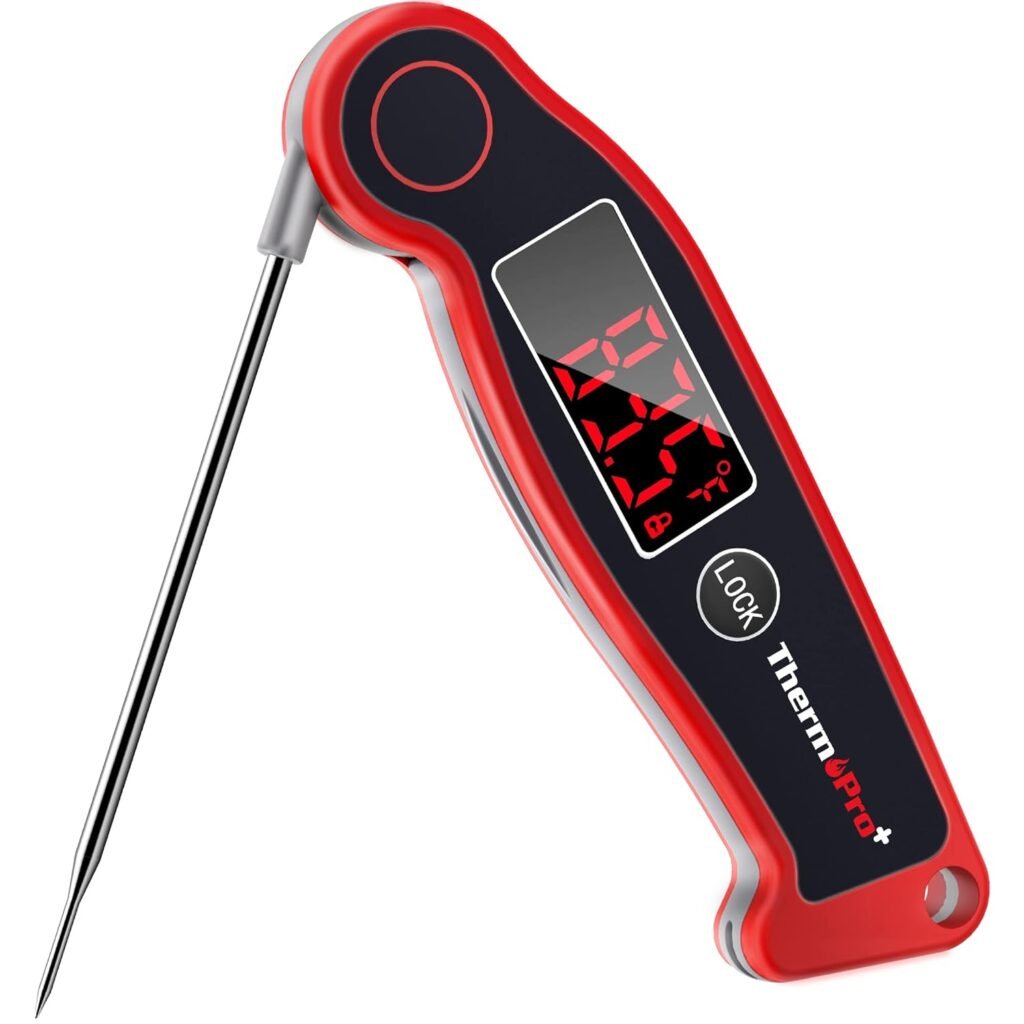
What I Love: This has been my daily driver for over two years, and it’s earned its spot next to my stove. The 2-3 second read time is genuinely fast—I can check a steak without losing sear temperature. The rotating display is smarter than it sounds; whether you’re left-handed, right-handed, or checking temps at weird angles, the screen automatically orients itself so you can read it.
The backlit display is bright enough to read in direct sunlight and dark enough at night that it won’t blind you. I’ve accidentally left it on the counter where it got splashed with pasta water, dropped it in the sink twice, and it still works perfectly. That IP65 waterproof rating isn’t marketing fluff.
What Could Be Better: The auto-off feature kicks in after 90 seconds, which saves battery but can be annoying when you’re doing multiple temperature checks. You’ll find yourself turning it back on frequently during prep. Also, while it’s advertised as having a magnet, it’s honestly too weak to hold reliably on my stainless fridge—I just keep it in a drawer.
The probe is 4.5 inches, which is good for most tasks but occasionally I wish it was longer when dealing with a massive turkey or large roast. Not a dealbreaker, but worth noting.
Battery Life Reality: They claim 3,000 hours, and while I haven’t timed it exactly, I replace the battery about once a year with regular use. The CR2032 batteries are cheap and easy to find at any drugstore.
Best For: Home cooks who want one reliable thermometer for everything. If you’re only buying one thermometer, this should probably be it.
Skip If: You need the absolute fastest reads (get the Thermapen) or you’re on a tight budget (get the Kizen instead).
Honest Rating: 9/10 – It does everything well without costing a fortune.
2. ThermoWorks Thermapen ONE
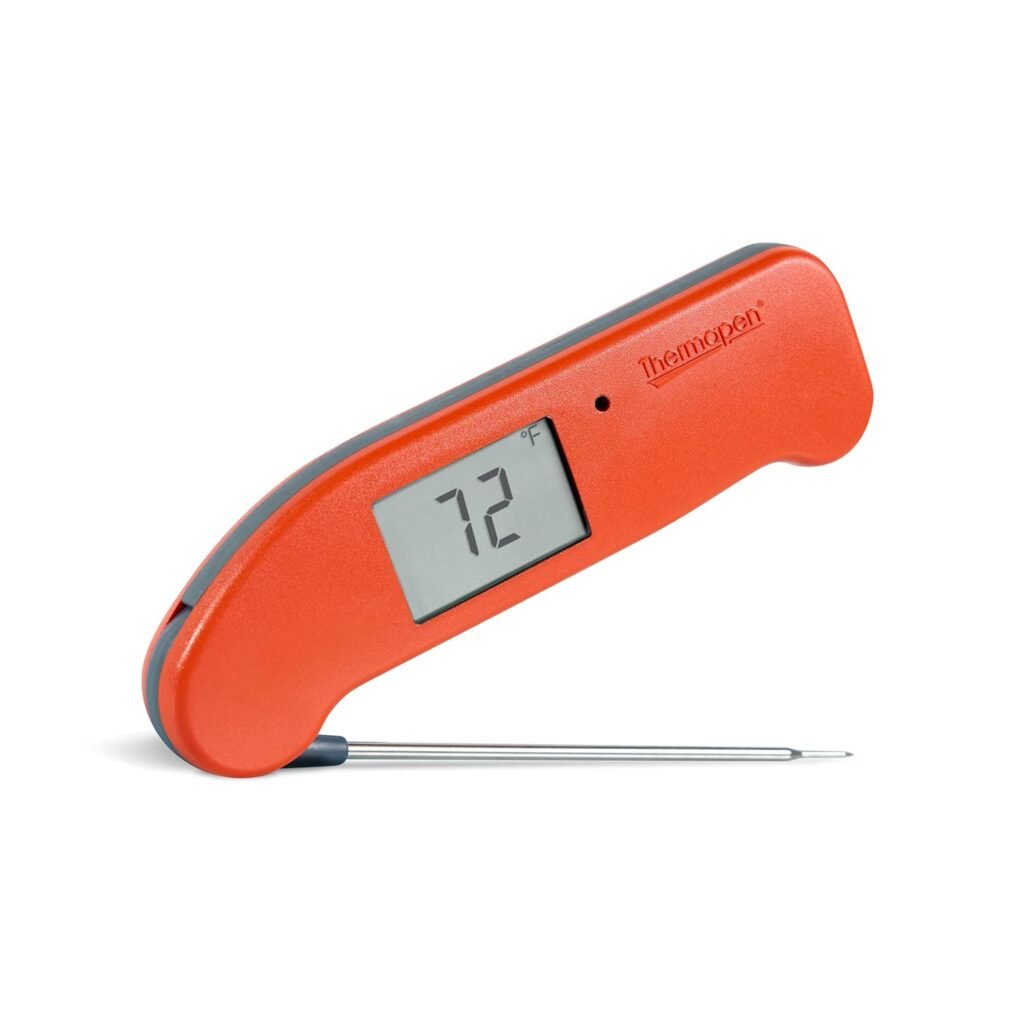
What I Love: This is the thermometer other thermometers want to be when they grow up. The 1-second read time isn’t just marketing—it genuinely reads that fast, and it’s accurate to 0.5°F. When you’re checking temps on a 500°F grill, that speed matters.
The build quality is incredible. It feels substantial in your hand, the hinge mechanism is smooth after three years of daily use, and the IP67 rating means I can literally rinse it under the tap without worry. I’ve dropped mine on concrete, knocked it off counters, and it keeps working.
The motion-sensing sleep/wake feature is brilliant—pick it up and it’s instantly on. The screen is huge and readable from any angle, and the accuracy has never wavered. I’ve tested it against ice water and boiling water multiple times, and it’s always spot-on.
What Could Be Better: Let’s address the elephant in the room: the price. At around $100, this costs as much as five budget thermometers. For casual home cooks, that’s hard to justify. You’re paying for precision, speed, and durability, but you need to decide if those things matter enough to you.
Also, the battery (while long-lasting) is a rechargeable lithium that will eventually degrade. ThermoWorks will replace it, but it’s not something you can swap yourself like a regular battery.
The advanced calibration features are great if you’re a perfectionist, but honestly, most people will never use them. You’re paying for features you might not need.
Real-World Performance: I use this for competition cooking and when I’m making expensive cuts of meat where precision matters. For a $60 wagyu steak, the investment in this thermometer has saved me from overcooking enough times that it’s paid for itself.
Best For: Serious home cooks, anyone who cooks professionally from home, competition BBQ enthusiasts, or people who want to buy once and never replace it.
Skip If: You cook occasionally or you’re just starting out with temperature monitoring. Get experience with a cheaper model first.
Honest Rating: 9.5/10 – Nearly perfect, but the price keeps it from a perfect score for most home cooks.
3. ThermoPro TP20 Wireless Remote Digital Meat Thermometer
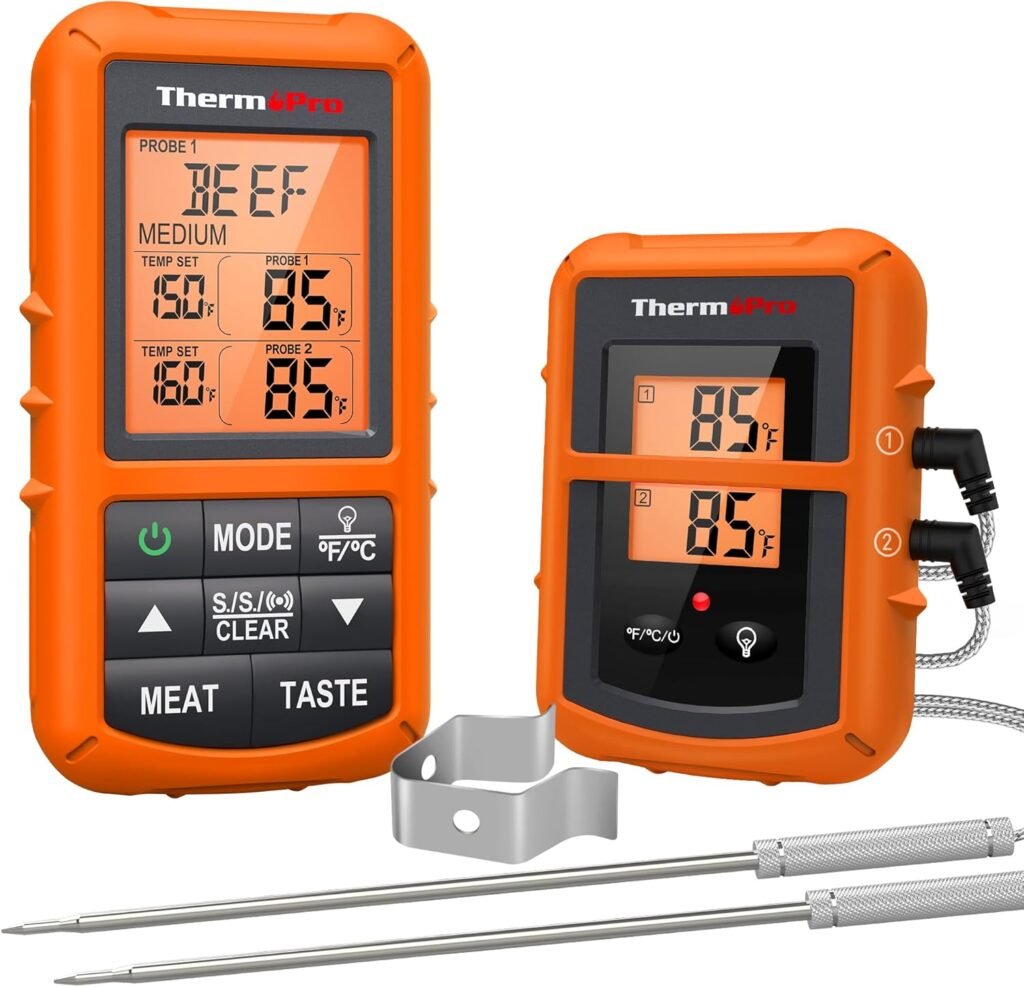
What I Love: This thermometer transformed how I cook roasts and turkeys. Having two probes means I can monitor both meat temperature and oven temperature simultaneously—game-changer for understanding how my oven actually performs.
The 300-foot wireless range is no joke. I’ve walked to my mailbox, gone upstairs, and even stepped outside while still receiving signals. The receiver has a belt clip and stands upright, so you can carry it or set it down. The timer and alarm functions actually work reliably, unlike some competitors I’ve tried.
Setup is intuitive. You select the meat type (beef, pork, chicken, etc.), choose your doneness level, and it calculates everything for you. Or you can manually set temperatures if you’re picky like me. The probes are color-coded so you don’t mix them up.
What Could Be Better: This is where I need to be honest. The probes aren’t as durable as I’d like. After about a year and a half, one of mine started giving inconsistent readings. ThermoPro sells replacement probes, but it’s an additional expense. I now have a backup set on hand.
The transmitter unit (the one that stays by your oven) eats through AAA batteries faster than I’d like—maybe 6-8 cooks before needing replacement. Not a huge deal, but rechargeable would have been nice.
The probes are only rated to 482°F, which is fine for ovens and smoking but limits you if you want to leave them in while grilling at high heat. Pull the probes before cranking heat above 450°F.
Temperature Accuracy: I’ve tested it against my Thermapen, and it’s accurate within 2-3 degrees, which is perfectly acceptable for most cooking. It’s not laboratory-precise, but it’s more than good enough for making sure your turkey is safe and your prime rib is perfect.
Best For: Anyone who does a lot of roasting, holiday cooks who need turkey insurance, and people who want to monitor cooking without babysitting the oven.
Skip If: You mainly do quick-cooking items like steaks or burgers. An instant-read is better for that.
Honest Rating: 8.5/10 – Excellent value and performance, with minor durability concerns.
4. Inkbird IBT-4XS Bluetooth Meat Thermometer
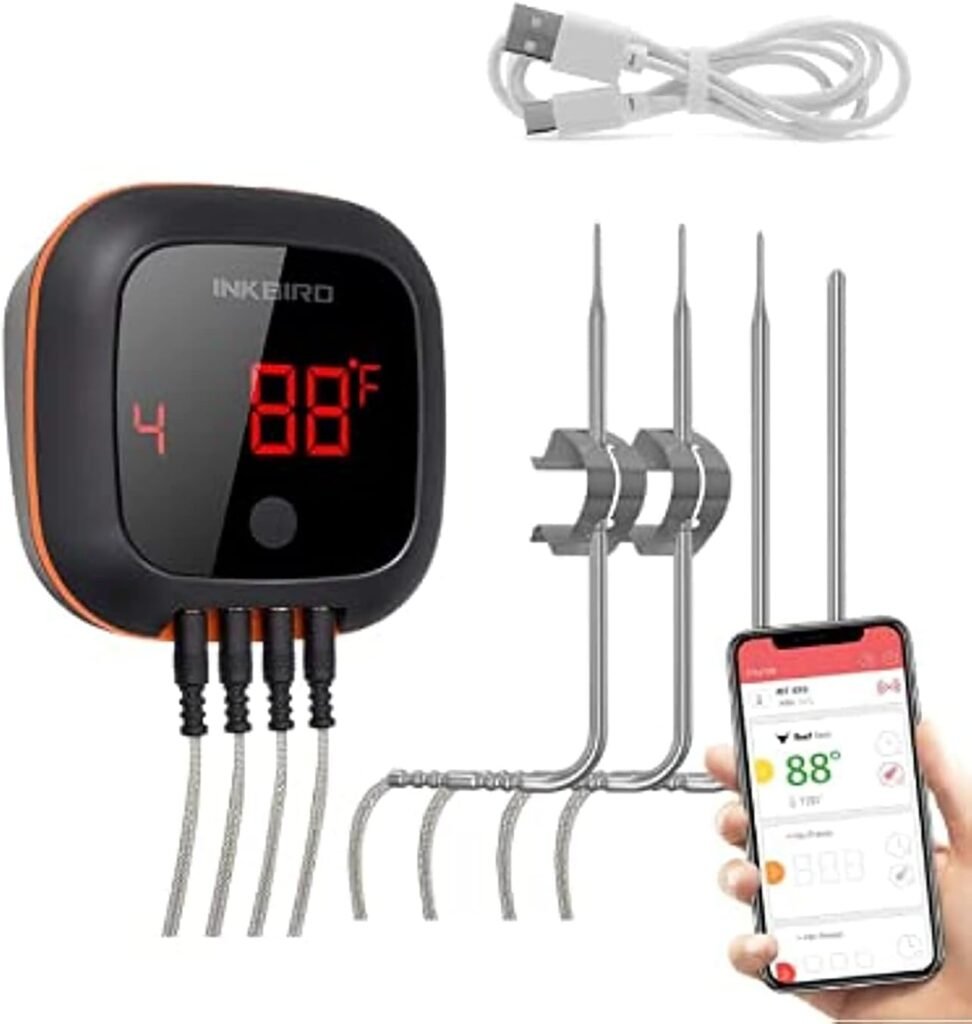
What I Love: Four probes. Bluetooth connectivity. Rechargeable battery. This is the modern BBQ thermometer done right. I can monitor four different items simultaneously or use multiple probes in one large brisket to check different sections.
The app (available for iOS and Android) is actually good, which is rare for kitchen gadgets. It’s intuitive, shows temperature graphs over time, and lets you set custom alarms. I can see exactly how my smoking chamber temperature fluctuated during a 14-hour cook, which helps me learn and improve.
The magnetic back sticks solidly to my smoker, and the rechargeable battery lasts through the longest cooks. I’ve done 18-hour briskets on a single charge. The probes are commercial-grade stainless steel and have held up well to dozens of smoking sessions.
Temperature range goes from 32°F to 572°F, which covers everything from cold-smoking cheese to high-heat grilling.
What Could Be Better: Bluetooth has a range limitation—about 150 feet with clear line of sight. If you have walls or obstacles between you and the smoker, expect that range to drop. For most backyards this is fine, but if you wanted to monitor from a neighbor’s house, you’re out of luck. (There are WiFi versions if you need more range.)
The app occasionally disconnects and needs to be reopened. Not constantly, but maybe once every few cooking sessions. Minor annoyance but worth mentioning.
The probes are color-coded, which is helpful, but in low light (like when smoking overnight), they’re hard to distinguish. I ended up putting colored tape on mine to make identification easier in the dark.
Setup Learning Curve: First-time setup takes about 10 minutes to pair everything and understand the app. Not difficult, but it’s not as plug-and-play as simpler models. Once you’ve got it configured though, subsequent uses are quick.
Best For: BBQ enthusiasts, people who smoke meat regularly, anyone doing long cooks who wants to monitor remotely, tech-savvy cooks who want data and graphs.
Skip If: You don’t have a smartphone or you prefer simple, no-app-required thermometers.
Honest Rating: 9/10 – Best-in-class for BBQ at this price point.
5. Lavatools Javelin PRO Duo
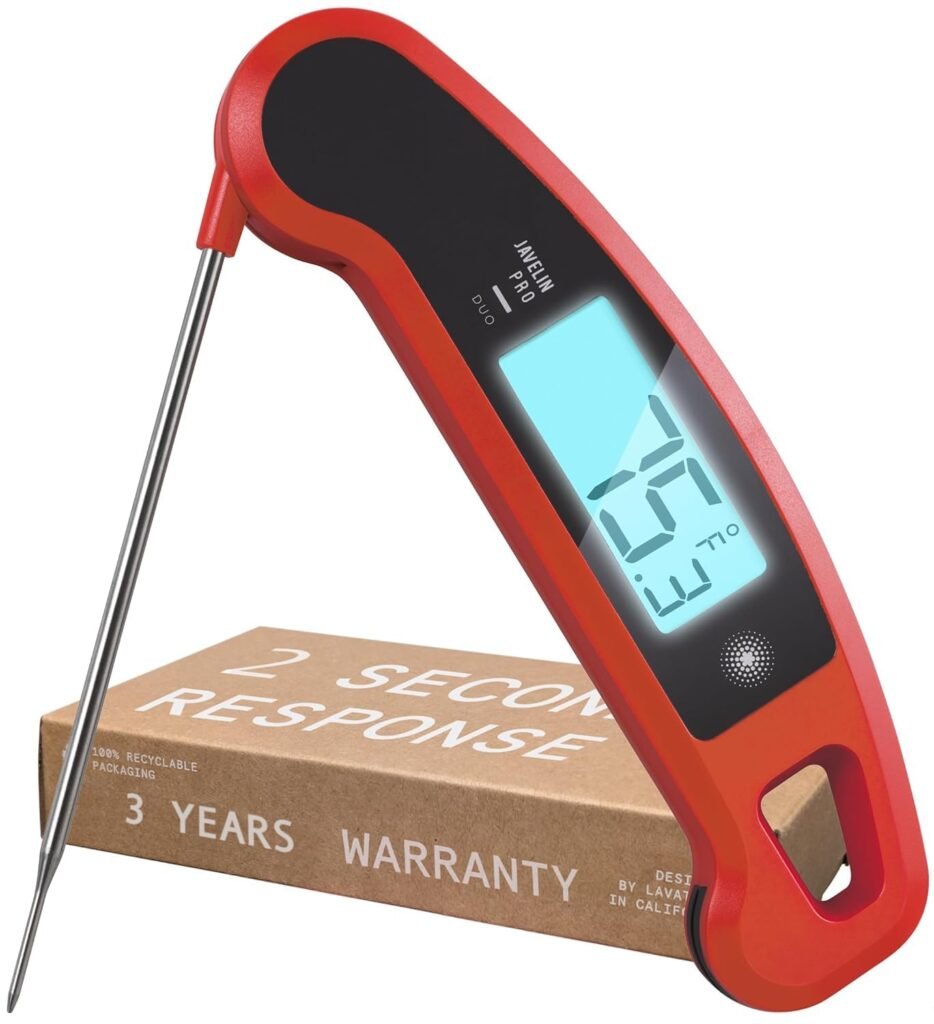
What I Love: This is my dedicated grilling thermometer. The 2-second read time is fast enough for quick checks without losing grill heat. The stabilized tip technology means it gives accurate readings even in thin cuts—I’ve tested it on 3/4-inch pork chops and it’s spot-on.
The auto-rotating display is fantastic. No matter how you’re holding it or what angle you insert the probe, the display flips to be readable. The ambidextrous design means my left-handed wife can use it as easily as I can.
Build quality is solid. The folding probe locks open securely, and the unit feels like it could take a beating. IP65 splash-proof rating means I don’t worry about grill splatter or rain during outdoor cooking.
The display is bright and easy to read in direct sunlight, which is surprisingly rare among thermometers. Many wash out in bright light, but not this one.
What Could Be Better: The probe is on the shorter side at 4.4 inches. For steaks and chops, this is perfect. For whole chickens or thick roasts, I wish it was an inch longer. It works, but you need to be careful about placement.
The magnet on the back is weak—same complaint I have with the ThermoPro. It’ll stick to metal surfaces, but not securely enough that I trust it.
Battery life is good but not great. The CR2032 battery lasts about 6 months with my usage pattern. Not terrible, but the Thermapen’s rechargeable is more convenient long-term.
Accuracy Note: Advertised as accurate to ±0.9°F, and in my testing against my Thermapen, it’s consistently within 1 degree. Excellent accuracy for the price point.
Best For: Grill masters, anyone who primarily cooks thinner cuts, people who want fast reads without Thermapen prices.
Skip If: You need to check temperatures in very thick roasts or whole turkeys—get something with a longer probe.
Honest Rating: 8.5/10 – Excellent grilling thermometer with great features at a fair price.
6. Kizen Digital Food Thermometer
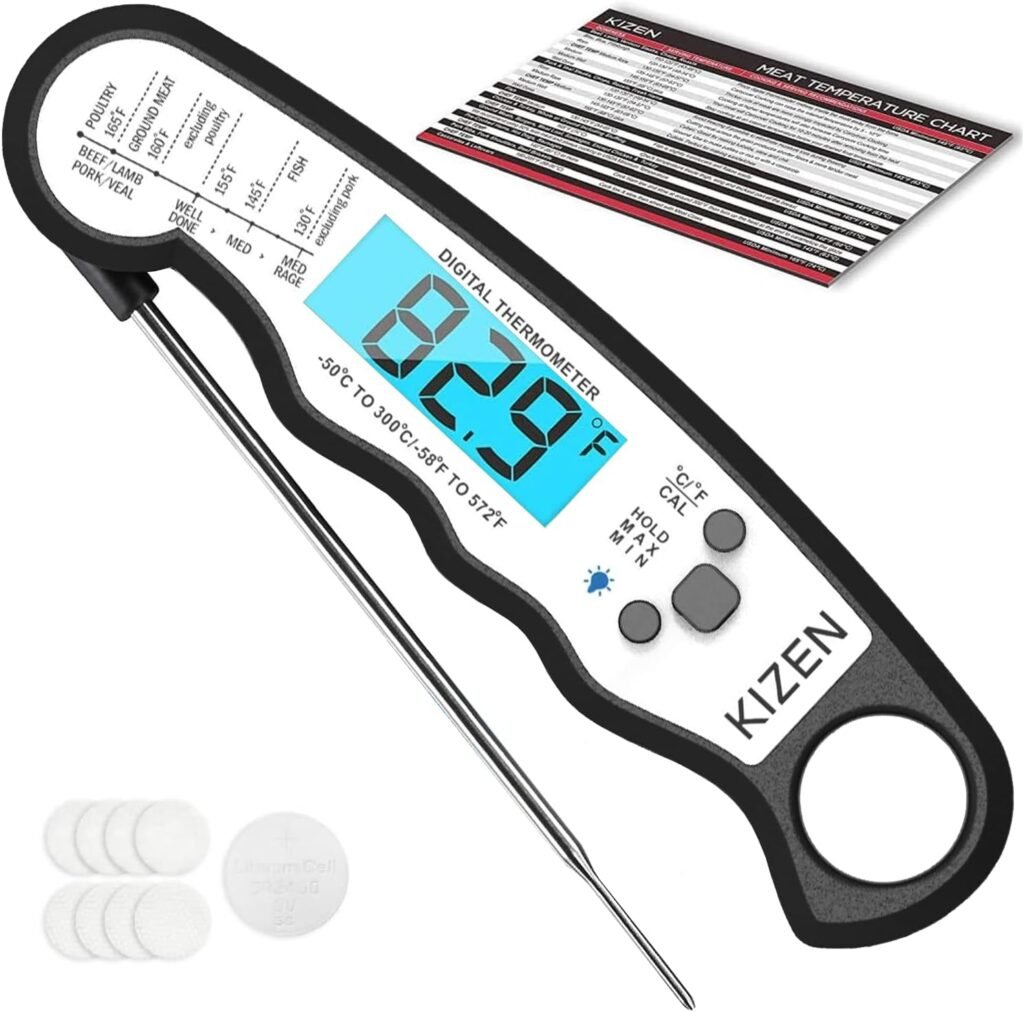
What I Love: For $15, this thermometer has no business being this good. The 3-4 second read time is respectable, and in accuracy tests, it’s consistently within 1.5 degrees of my Thermapen. The waterproof design means I can rinse it under the tap, and after a year of use, mine still works perfectly.
The 5.9-inch probe is actually longer than more expensive models, making it easier to safely check large roasts without getting too close to hot pans. The display is clear and backlit, making it readable in various lighting conditions.
It comes with a protective sheath, which is a nice touch at this price point. Many budget thermometers are bare-bones, but this one feels like they actually thought about user experience.
What Could Be Better: The magnet is essentially useless—so weak it won’t hold on any surface. Not a deal-breaker since I keep mine in a drawer anyway, but don’t count on magnetic storage.
The auto-shutoff after 10 minutes of non-use is a battery-saver, but there’s no manual off button. You either use it or wait for auto-shutoff. Minor inconvenience.
The LCD screen isn’t as robust as premium models. I’ve noticed the contrast fading slightly after a year, but it’s still perfectly readable. Just don’t expect it to look showroom-new forever.
Real Talk on Durability: This isn’t built like a tank. The plastic housing feels less substantial than pricier models. I’ve dropped mine once from counter height onto tile, and while it survived, I wouldn’t push my luck. Treat it reasonably well and it’ll last.
Best For: First-time thermometer buyers, budget-conscious cooks, people who want to test if temperature cooking is for them before investing more, backup thermometer for camping or travel.
Skip If: You need the fastest possible reads or you’re rough on kitchen tools.
Honest Rating: 8/10 – Incredible value that punches above its price point, with minor durability concerns.
7. ThermoPro TP27 Long Range Wireless Meat Thermometer
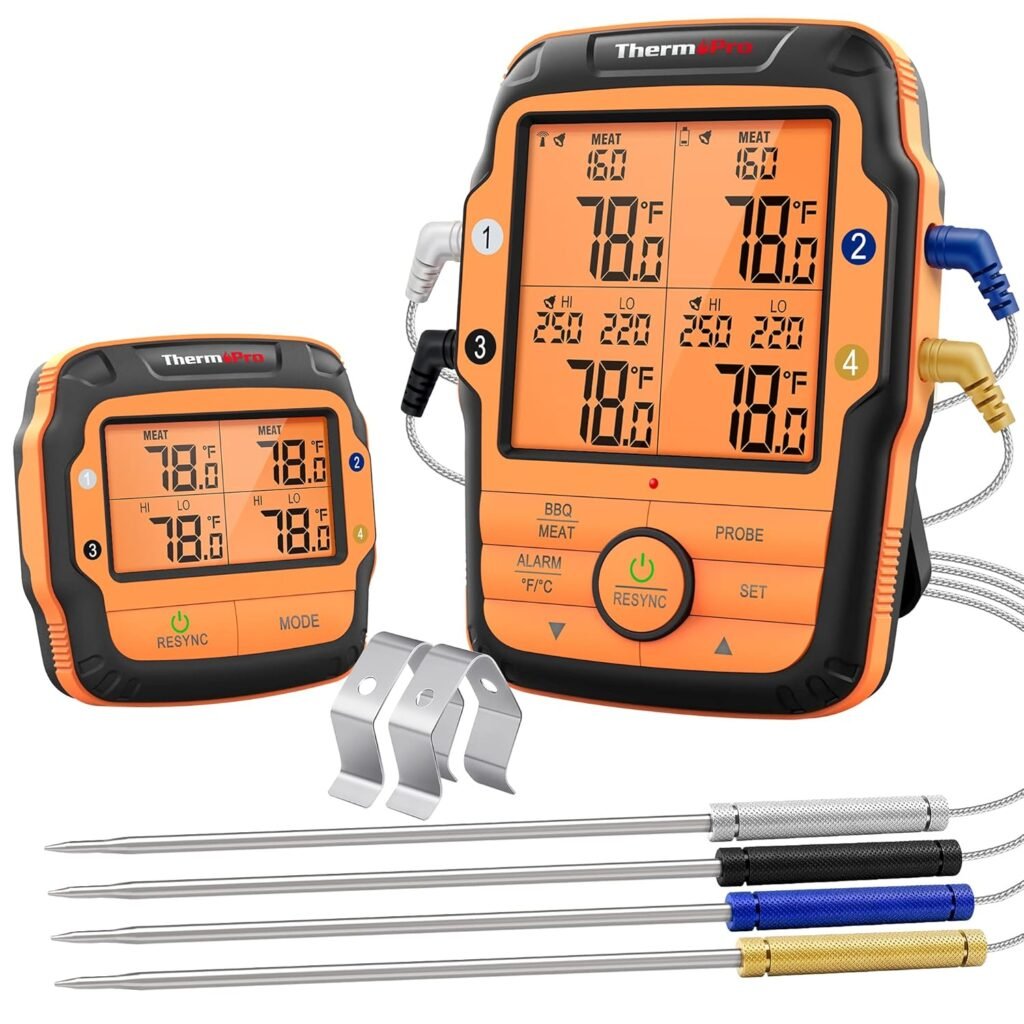
What I Love: The 500-foot range on this thing is absurd in the best way. I’ve tested it by walking down my street, and it maintained connection. For backyard smoking, you could be anywhere in or around your house and still monitor temperatures.
Four probes mean I can track multiple pieces of meat plus smoker temperature. The large LCD receiver displays all four temperatures simultaneously, which is cleaner than scrolling through readings. The preset temperature options for different meats take the guesswork out for beginners.
Battery life on both the transmitter and receiver is excellent—I get months out of a set of batteries even with regular use. The belt clip on the receiver is sturdy, and the backlight makes it easy to check temps at night.
What Could Be Better: No smartphone connectivity. For some people, this is actually a plus (simpler is sometimes better), but if you want graphs, data logging, or app-based monitoring, this isn’t it.
The probes are a bit stiff and can be tricky to insert into denser meats. Not impossible, just requires more pressure than some competitors. The probe wires also feel slightly fragile where they connect—I’m careful not to yank or twist them.
The alarm is LOUD. Like, wake-the-neighbors loud. There’s no volume control. This is great if you’re far from the receiver, but if it’s sitting next to you on the couch, prepare to jump.
Temperature Range: 32°F to 572°F covers everything I need for smoking and grilling. The accuracy is within 2-3 degrees, which is perfectly acceptable for BBQ use.
Best For: Smokers and BBQ enthusiasts who don’t need smartphone connectivity, people with large properties who need extended range, those who prefer simple, straightforward technology.
Skip If: You want app-based monitoring and data logging. Get the Inkbird instead.
Honest Rating: 8/10 – Excellent range and reliability without the smartphone complexity.
8. CDN ProAccurate Oven Thermometer
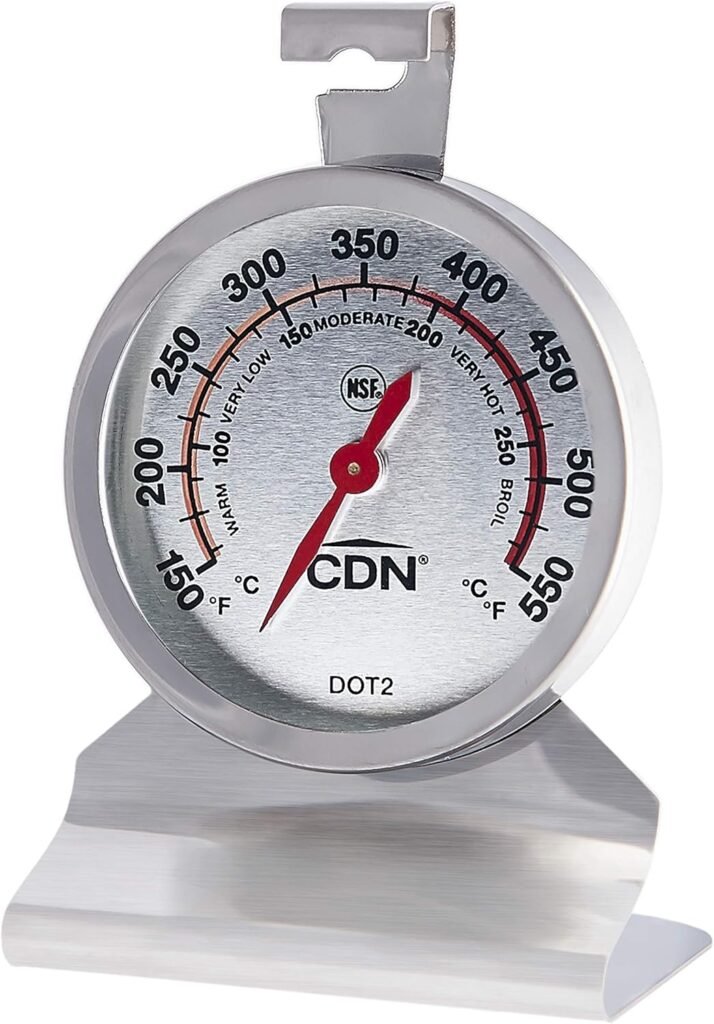
What I Love: This analog thermometer has been in my oven for eight years and still reads accurately. No batteries, no electronics to fail, just a simple bi-metal dial that works. The 2-inch face is large enough to read through the oven window without opening the door.
The hook design lets you hang it from an oven rack or stand it on the rack. I prefer standing it in the back where I can see it through the window. The temperature range goes up to 550°F, covering anything you’d do in a home oven.
It’s accurate to within 2 degrees in my testing. I’ve calibrated it against my digital thermometers multiple times, and it’s consistently reliable. For under $15, this is exceptional performance.
What Could Be Better: It’s a dial thermometer, so it’s not instant-read. It takes a few minutes to stabilize to oven temperature, which means you can’t use it to quick-check meat. This is specifically for monitoring oven or grill ambient temperature.
The stainless steel can get discolored over time from heat and cooking residue. It doesn’t affect function, but if you’re particular about aesthetics, know that it’ll develop a patina.
The face is somewhat susceptible to grease splatter if you’re cooking something messy. You’ll need to wipe it down occasionally to keep it readable.
Best Use Case: I use this specifically to verify my oven temperature is what the dial says it is. Turns out, my oven runs about 15 degrees hot, which explained years of slightly overcooked cookies. This thermometer paid for itself immediately in better baking results.
Best For: Bakers who need accurate oven temps, people who want to verify their oven’s accuracy, anyone who wants a set-it-and-forget-it temperature monitor.
Skip If: You need to measure meat temperatures—this is for ambient temperature only.
Honest Rating: 8.5/10 – Does one thing extremely well for very little money.
9. MEATER Plus Smart Wireless Thermometer
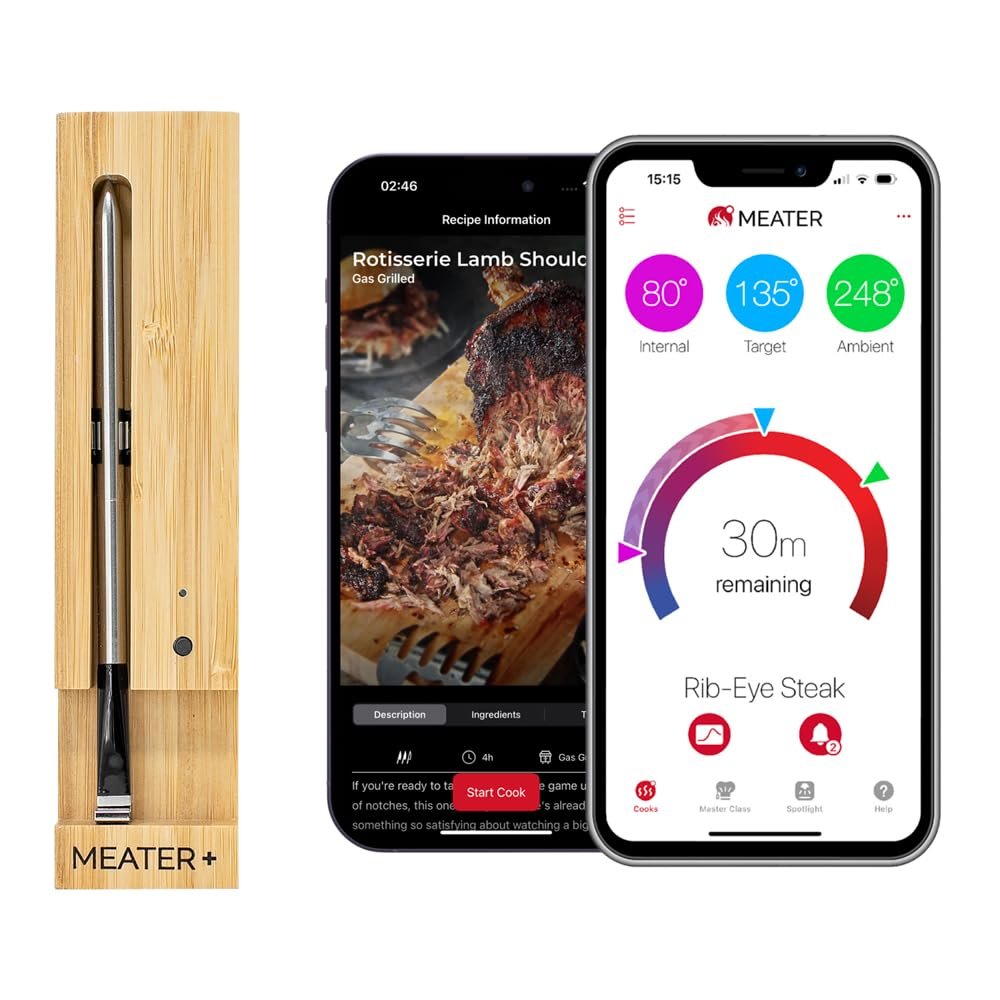
What I Love: This completely wireless thermometer feels like the future. No cables, no wires—just a sleek wooden probe you insert into your meat and monitor via smartphone. The 165-foot Bluetooth range (when using the charger as a repeater) covers my entire property.
The guided cook feature in the app is genuinely helpful. It estimates cooking time, tells you when to remove food from heat, and walks you through the resting period. For beginners, this is invaluable. The app also stores your cooking history, so you can replicate that perfect ribeye.
The dual temperature sensors are clever—one measures internal meat temp, another measures ambient cooking temp. This gives you better predictions and helps you manage both your food and your cooking environment.
It’s gorgeous. If aesthetics matter to you, this is the best-looking thermometer on the market.
What Could Be Better: At $100+, this is expensive for what it is—especially since you only get one probe. If you need to monitor multiple items, you’d need multiple MEATER probes or step up to the MEATER Block with four probes at an even higher price.
The probe must be carefully handled. It’s durable for what it is, but it’s not as bombproof as traditional wired probes. I’ve been careful not to drop mine or bend the probe tip.
Battery life on the probe is rated at 24 hours, which is enough for most cooks but can be limiting for very long smokes. I’ve had it die on me once during an 18-hour brisket cook. Now I make sure it’s fully charged before long sessions.
App Dependency: This is app-only. There’s no standalone receiver. If your phone dies or you don’t have it with you, you can’t monitor temperatures. For some people, this is a dealbreaker.
Real-World Reliability: The Bluetooth connection occasionally drops and requires reconnecting the app. Not constantly, but maybe once every 3-4 uses. Minor annoyance that’s improved with firmware updates.
Best For: Tech enthusiasts, people who want the most modern cooking experience, those who cook single large cuts (prime rib, turkey, brisket), gift for the cook who has everything.
Skip If: You need to monitor multiple items simultaneously, you prefer tactile receivers over apps, or you’re on a budget.
Honest Rating: 7.5/10 – Innovative and beautiful, but expensive and limited to one probe.
Quick Comparison: Top Food Thermometers at a Glance
Based on my real-world testing, here’s how they stack up:
Speed: ThermoWorks Thermapen ONE (under 1 second) > Lavatools Javelin PRO (2 seconds) > ThermoPro TP19 (2-3 seconds) > Kizen (3-4 seconds)
Value: ThermoPro TP20 offers the best bang for buck in probe thermometers. For instant-reads, Kizen delivers shocking performance at its price point.
Versatility: ThermoPro TP19 handles everything from candy making to grilling. One thermometer, endless uses.
BBQ Enthusiasts: Inkbird IBT-4XS gives you pro-level features with smartphone connectivity that actually works reliably.
Beginners: Start with either the Kizen instant-read. It will transform your cooking without breaking the bank.
Gift Giving: The ThermoPro TP19 or Lavatools Javelin make excellent gifts for the home cook who has everything. Practical, useful, and appreciated every time they cook.
Most Durable: ThermoWorks Thermapen ONE has survived years of abuse. CDN ProAccurate has lasted eight years and counting with zero maintenance.
How to Use a Food Thermometer Correctly
Having the best chef thermometer in the world doesn’t help if you’re using it wrong. Here are the techniques that actually matter:
Placement is Everything: For whole poultry like a meat thermometer for turkey applications, insert the probe into the thickest part of the breast or thigh, avoiding bone. Bone conducts heat differently and will give false readings. For roasts, aim for the center of the thickest part.
Check Multiple Spots: Large cuts of meat can have temperature variations. I always check 2-3 spots on a big roast. This is especially important with turkey—the breast and thigh cook at different rates.
Account for Carryover Cooking: Meat continues cooking after you remove it from heat. For steaks, I pull them off about 5 degrees before my target. For larger roasts, this can be 10 degrees. Understanding this prevents overcooking.
Keep It Clean: Raw meat means bacteria. Clean your probe with hot soapy water or sanitizing wipes between readings, especially if you’re checking different types of meat.
Calibrate Periodically: Most thermometers can drift over time. Test yours in ice water (should read 32°F) or boiling water (212°F at sea level). If it’s off by more than 2 degrees, it’s time for recalibration or replacement.
Special Considerations: Oven-Safe and Probe Thermometers
If you’re serious about roasting, you need to understand inside oven meat thermometer options. These are designed to stay in your food the entire cooking time, with either the whole unit or just the probe being heat-resistant.
A food thermometer oven safe model typically has the probe stay in the meat while the display sits outside. Some newer models have completely oven-safe wireless designs where you can leave everything inside and read temperatures on your phone.
I use this style for almost all roasts now. For an oven meat temperature probe setup, you’re getting continuous temperature monitoring, which helps you understand how your oven performs and how your particular cut of meat responds to heat.
Temperature Guide: What Numbers You’re Aiming For
Having the best meat temp probe is useless if you don’t know your target temperatures. Here’s my quick reference that lives on my fridge:
Beef, Lamb, and Veal:
- Rare: 125°F
- Medium-Rare: 130-135°F
- Medium: 140-145°F
- Medium-Well: 150-155°F
- Well-Done: 160°F+
Pork:
- Medium: 145°F (USDA updated this – pork can be slightly pink!)
- Ground Pork: 160°F
Poultry:
- Chicken and Turkey: 165°F (breast and thigh)
- Ground Poultry: 165°F
Fish and Seafood:
- Fish: 145°F or until opaque and flaky
- Shrimp, Lobster, Crab: 145°F
Remember, these are final temperatures after resting. Pull your meat off heat about 5-10 degrees early depending on size.
Common Mistakes to Avoid
I’ve made every mistake possible with food thermometers. Learn from my errors:
Testing too early: Let large roasts cook for at least an hour before you start obsessively checking. Early checking just releases heat and extends cooking time.
Forgetting to rest meat: The temperature will continue rising 5-10 degrees after you pull it off heat. Factor this in or you’ll overcook everything.
Only checking once: For large cuts, check multiple locations. I once served a turkey that was 175°F in the breast (dry) and 155°F in the thigh (undercooked) because I only checked one spot.
Touching bone: Bone heats up faster and hotter than meat. If your probe hits bone, you’ll get a falsely high reading.
Not preheating grill zones: If you’re trying to hit precise temperatures for grilling, you need to understand your grill’s hot and cool zones. Test them with your thermometer before you add food.
Maintaining Your Food Thermometer
To keep your thermometer accurate and functioning for years:
Clean after every use: Hot soapy water for the probe, and wipe down the unit. Don’t submerge the entire thing unless it’s rated waterproof.
Store properly: Most instant-reads come with a sleeve or case. Use it. I killed a thermometer by tossing it loose in a drawer where the probe got bent.
Replace batteries proactively: Nothing’s worse than reaching for your thermometer mid-cook and finding dead batteries. I replace mine every six months whether needed or not.
Recalibrate periodically: Test accuracy every few months using the ice water or boiling water method.
Protect the probe tip: This is the most sensitive part. Don’t use it as a prying tool or drop it on hard surfaces.
The Bottom Line: Choosing Your Perfect Food Thermometer
After all this, what’s the best food thermometer? Honestly, it depends on how you cook.
If you’re a grilling enthusiast who makes steaks weekly, invest in a fast, accurate instant-read. You’ll use it constantly and appreciate the speed and precision.
If roasting is your thing—holiday turkeys, Sunday prime rib, whole chickens—get a probe thermometer with a cable. The ability to monitor without opening your oven is transformative.
For smoking and BBQ, you need durability and the ability to monitor for hours. A wireless multi-probe setup makes low and slow cooking so much easier.
And if you’re just starting out or on a budget? A basic instant-read thermometer will dramatically improve your cooking for a modest investment. Even the best affordable meat thermometer beats guessing every single time.
My Final Thoughts
I’ll be honest—I resisted using thermometers for years. It felt like cheating, like I should just “know” when food was done. That pride cost me a lot of overcooked steaks and dry chicken.
Now? I use a thermometer for almost everything. It’s not cheating it’s cooking smart. the difference between hoping your expensive ribeye is cooked right and knowing it’s perfect. It’s serving juicy, safe chicken instead of dry, overcooked protein or worse, undercooked poultry.
Whether you’re looking for the best meat probe thermometer for smoking briskets all weekend or just want to nail your weeknight chicken dinners, there’s a thermometer that fits your needs and budget. The key is understanding how you cook and choosing features that match.
Temperature control is the secret that separates good home cooks from great ones. A reliable thermometer gives you that control. Your family and guests will notice the difference, even if they don’t know your secret weapon.
Take the guesswork out of cooking. Invest in a quality food thermometer. Your taste buds (and your dinner guests) will thank you.
Have questions about choosing the right thermometer for your cooking style? Drop a comment below—I’m always happy to help fellow home cooks find the right tools for their kitchen.