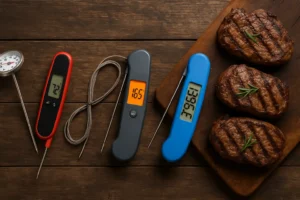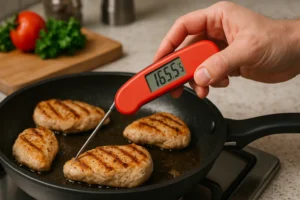
A dependable instant-read thermometer helps you check the center of a steak, chicken breast, loaf of bread or pan of hot oil without leaving a probe in place throughout cooking. The best models give a stable reading quickly, are easy to read over heat and can be cleaned without fuss.
For this guide, we compared current manufacturer specifications, probe design, stated response time, accuracy, display usability, water-resistance rating, storage and calibration features. Products were not personally tested unless explicitly stated. We avoided treating display resolution as proof of accuracy and did not use temporary prices or changing review counts as ranking factors.
Our top overall choice is the Lavatools Javelin PRO Duo for its balance of speed, rotating display and useful everyday features. The ThermoPro TP19H is the value pick, while the OXO Thermocouple suits shoppers who want a more premium design.
If you want to compare other probe styles before deciding, visit our best food thermometers guide.
Quick recommendations
- Best overall: Lavatools Javelin PRO Duo
- Best value: ThermoPro TP19H
- Best premium ergonomic pick: OXO Good Grips Thermocouple Thermometer
- Best budget folding pick: Alpha Grillers Digital Meat Thermometer
- Best portable pick: Taylor TruTemp Compact Folding Thermometer
- Best slim pocket-style pick: Taylor 9842 Waterproof Instant-Read Thermometer
Instant-read thermometer comparison
| Model | Best for | Stated speed | Key feature |
| Javelin PRO Duo | Most cooks | 2-3 sec | Rotating display |
| ThermoPro TP19H | Value | 3-4 sec | Hold + motion wake |
| OXO Thermocouple | Premium use | 2-3 sec | Thermocouple tip |
| Alpha Grillers | Budget | 1-2 sec claimed | IP67 folding body |
| Taylor TruTemp Compact | Portable kits | Not published | Carabiner clip |
| Taylor 9842 | Pocket storage | Not published | NSF + waterproof |
Manufacturer specifications can change. Confirm the current listing before publishing or replacing a product block.
Best instant-read thermometers in 2026
1. Lavatools Javelin PRO Duo – Best overall
Research verdict: The strongest all-around choice for most home cooks who want a fast rotating display, useful kitchen features and a midrange price.
The Javelin PRO Duo combines a typically 2-3 second response with a large auto-rotating backlit display. A hold function, magnetic storage and motion wake make it practical when you are working over a hot grill or moving between the oven and counter.
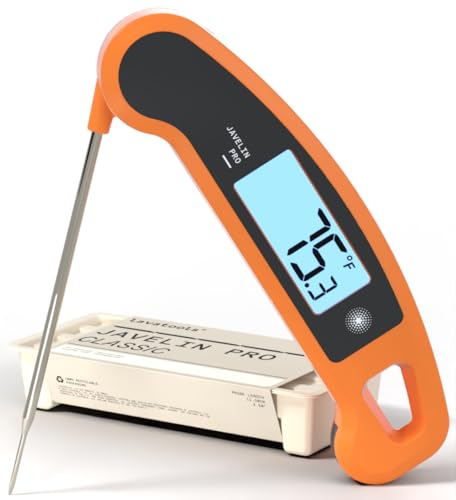
- 🥇 Voted #𝟭 𝗺𝗶𝗱-𝗽𝗿𝗶𝗰𝗲𝗱 𝘁𝗵𝗲𝗿𝗺𝗼𝗺𝗲𝘁𝗲𝗿 by America’s Test Kitchen and Wirecutter and #𝟭 𝘁𝗵𝗲𝗿𝗺𝗼𝗺𝗲𝘁𝗲𝗿 by NBC News. Featured in m…
- 𝗨𝗹𝘁𝗿𝗮-𝗳𝗮𝘀𝘁 𝟮-𝟯 𝘀𝗲𝗰𝗼𝗻𝗱 𝗿𝗲𝗮𝗱𝗼𝘂𝘁𝘀 thanks to a proprietary high-performance Japanese sensor, making Javelin PRO Classic one …
- 𝗦𝘂𝗽𝗲𝗿𝗯 𝗮𝗰𝗰𝘂𝗿𝗮𝗰𝘆 𝗼𝗳 ±𝟬.𝟱°𝗙 achievable via laboratory calibration. Javelin PRO Classic is an instrument-grade digital cook…
Key specifications
- Typical response: 2-3 seconds
- Claimed accuracy: +/-0.9 F from -4 F to 302 F
- Range: -40 F to 482 F
- IP65 splash resistance
- Auto-rotating display, hold, magnet and motion wake
Advantages
- Fast enough for checking several pieces of meat quickly
- Display works well from either hand and awkward angles
- Long claimed battery life and convenient magnetic storage
Limitations to know
- Splash-resistant rather than fully waterproof
- Costs more than basic thermistor models
Best for: Most home cooks, grilling and everyday baking.
2. ThermoPro TP19H – Best value with rotating display
Research verdict: A practical lower-cost option with the usability features many shoppers actually notice every day.
The TP19H offers a rotating backlit display, motion sensing, temperature hold and recalibration. Its 3-4 second response is not class-leading, but it is quick enough for routine steaks, chicken, bread, oil and candy checks.

- Fast & Accurate: Get precise readings in just 1 second with ±0.9°F accuracy. NSF Certified for trusted food safety, this…
- 2.0″ Large Auto-Rotating Backlit Display: A large 2.0-inch backlit display with 180° auto-rotation keeps readings facing…
- Motion sensing sleep/wake: The cooking thermometer, one of the kitchen essentials, automatically powers on when the prob…
Key specifications
- Typical response: 3-4 seconds
- Claimed accuracy: +/-0.9 F in the key cooking range
- 4.3-inch folding probe
- IP65 water resistance
- Rotating backlight, hold, calibration and magnetic back
Advantages
- Strong feature set for the price
- Easy to read for left- or right-handed use
- Hold function lets you move away from heat before reading
Limitations to know
- Slower than premium thermocouple models
- IP65 does not mean it should be submerged
Best for: Value-focused shoppers who want a folding thermometer with modern conveniences.
3. OXO Good Grips Thermocouple Thermometer – Best ergonomic premium pick
Research verdict: A premium alternative for shoppers who prioritize a comfortable design and a probe that is easy to deploy.
OXO states that this thermocouple model reads in 2-3 seconds with accuracy of +/-0.9 F. The rotating probe and display support either hand, while the backlight and shallow-insertion thermocouple tip help with thin foods.

- Provides temperature readings in 2-3 seconds with an accuracy of 0.9°F
- 225° rotating probe and automatic screen rotation for ambidextrous use at any angle
- Unique rotating dial eliminates the need to touch the probe after use
Key specifications
- Response: 2-3 seconds
- Claimed accuracy: +/-0.9 F
- Range: -58 F to 572 F
- Rotating probe and screen
- Waterproof body and automatic backlight
Advantages
- Comfortable, polished design
- Wide temperature range for meat, frying and candy
- Thin-tip thermocouple needs less insertion depth
Limitations to know
- Premium price
- Larger investment than most casual cooks need
Best for: Frequent cooks who want a premium, easy-handling thermometer.
4. Alpha Grillers Digital Meat Thermometer – Best budget folding pick
Research verdict: A sensible budget option for occasional grilling and everyday kitchen checks.
This folding digital thermometer focuses on the essentials: a bright backlight, quick claimed response, recalibration and an IP67-rated body. It is a better fit for a budget roundup than a slow analog dial thermometer.

- Instant Read Food Thermometer | Our instant read thermometer features a temperature probe and advanced, highly accurate …
- Multi-Use | From bbq thermometer to baking thermometer, our digital food thermometer for cooking is perfect for meats, l…
- Easy-Read Digital Thermometer For Cooking | Large instant thermometer dial with bright blue backlight means you can alwa…
Key specifications
- Claimed response: 1-2 seconds
- Folding stainless-steel probe
- Bright backlit display
- Recalibration feature
- IP67 water-resistance rating
Advantages
- Low entry cost
- Simple controls and readable screen
- Easy-clean construction and broad cooking uses
Limitations to know
- Fewer premium display features
- Long-term consistency may not match professional instruments
Best for: Occasional cooks, first-time buyers and a spare grill thermometer.
5. Taylor TruTemp Compact Folding Thermometer – Best portable pick
Research verdict: A compact choice that is easy to clip to an apron or grill kit.
Taylor pairs a folding design with a backlit display, waterproof construction and a carabiner clip. It is built around portability rather than laboratory-level speed, so it suits cookouts, camping and small kitchens.
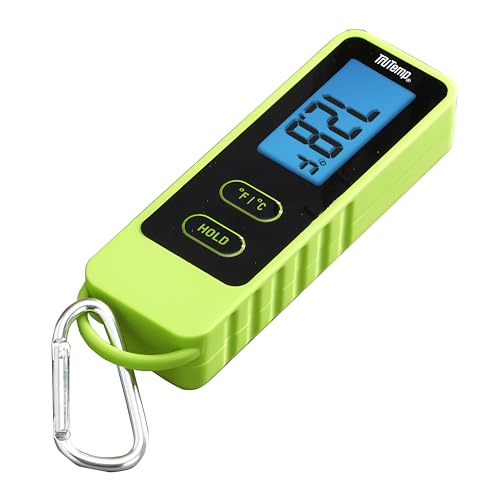
- WATERPROOF CONSTRUCTION: Built to withstand splashes and spills during outdoor grilling, backyard BBQs, and busy kitchen…
- FOLDING PROBE WITH CARABINER CLIP: The foldaway probe design allows for safe, compact storage in drawers or gear bags; a…
- BRIGHT BLUE BACKLIT DISPLAY: A vivid blue backlight delivers sharp, easy-to-read temperature readings in low-light or ni…
Key specifications
- Folding, compact body
- Blue backlit display
- Waterproof construction
- Integrated carabiner clip
- Battery-change screwdriver included
Advantages
- Easy to carry and store
- Useful for outdoor cooking kits
- Simple backlight for evening grilling
Limitations to know
- Official page does not publish a response-time claim
- Less detailed performance documentation than premium picks
Best for: Camping, cookouts and cooks who want a thermometer attached to their gear.
6. Taylor 9842 Waterproof Instant-Read Thermometer – Best slim commercial-style pick
Research verdict: A straightforward slim probe for cooks who prefer a pocket-style tool rather than a folding body.
The Taylor 9842 uses a waterproof, antimicrobial housing and can be recalibrated. Its -40 F to 450 F range covers common meat, baking and many frying tasks, and the protective sleeve makes drawer or apron storage easier.

- WATERPROOF DESIGN: This thermometer is designed to get wet without ruining the product. It takes splashes without damage…
- RECALIBRATABLE: Using the sleeve the thermometer can be recalibrated for precise measurements
- EASY TO USE, EASY TO READ: The 0.8 inches display is easily seen from all angles
Key specifications
- Range: -40 F to 450 F
- Waterproof design
- Recalibratable
- Antimicrobial housing and sleeve
- NSF certification
Advantages
- Slim and easy to store
- Simple design with few controls to learn
- Useful certification and cleaning-oriented construction
Limitations to know
- Not as fast or display-rich as the top folding picks
- Small display is less convenient in low light
Best for: Pocket storage, restaurant-style prep and buyers who prefer a slim probe.
How to choose an instant-read thermometer
Prioritize real response time
A faster thermometer reduces the time your hand spends over a grill and makes it easier to check several spots. One to three seconds is excellent; three to four seconds is still practical for home use. Treat manufacturer times as claims, not independent test results.
Understand accuracy versus resolution
A screen showing tenths of a degree does not automatically make the instrument accurate to a tenth. Look for a stated accuracy tolerance and, when precision matters, certification or calibration documentation.
Choose the right probe and display
A thin tapered tip works better for thin foods because it needs less insertion depth. A rotating backlit display is useful for left-handed cooks, low grills and nighttime barbecue. A hold button helps when the screen is hard to see near heat.
Check the water-resistance rating
Waterproof or IP67 construction is easier to rinse, but follow the manufacturer care instructions. IP65 generally protects against water jets or splashes; it is not permission to soak the thermometer or place it in a dishwasher.
Decide between instant-read and leave-in monitoring
Instant-read models are for spot checks and should normally be removed after measuring. For long smoker sessions or remote alerts, compare our best wireless meat thermometers instead.
How to use an instant-read thermometer accurately
- Insert the tip into the thickest part of the food, away from bone, large fat pockets and the pan.
- For thin foods, insert from the side so more of the sensing area reaches the center.
- Check more than one location when thickness is uneven.
- Wait for the display to stabilize, then clean the probe immediately after use.
- Verify questionable readings with an ice-water check and follow the model-specific calibration instructions.
For a deeper explanation of probe types, placement and safe use, read our complete guide to meat thermometers.
Frequently asked questions
The Lavatools Javelin PRO Duo is our balanced pick because it combines a fast stated response with a rotating display, hold function and magnetic storage. Buyers focused mainly on price should compare the ThermoPro TP19H and Alpha Grillers models.
Usually no. Most instant-read thermometers are designed for short spot checks, not continuous exposure. Use a leave-in probe thermometer when you need monitoring throughout cooking.
Aim for the center of the thickest section and avoid bone or the cooking surface. With burgers, chops and other thin foods, inserting from the side often gives a better center reading.
Not automatically. A water-resistance rating and dishwasher approval are different. Follow the exact cleaning instructions supplied with the model.
Check whenever readings seem suspicious, after a hard drop, or periodically if you rely on the tool frequently. Use an ice-water test and the manufacturer calibration procedure.
No. Depending on the temperature range, they can help with bread, candy, frying oil, milk, leftovers and other cooking tasks. Never expose the plastic body to heat beyond its operating instructions.
Final recommendation
Choose the Lavatools Javelin PRO Duo if you want the best balance of speed, screen usability and storage features. Choose the ThermoPro TP19H for value, or the OXO Thermocouple if ergonomics and a premium thermocouple design matter more than price. The Alpha Grillers and Taylor models make more sense for occasional use, portability or a slim pocket-style form.
Whichever model you buy, technique matters: measure the center of the food, check multiple spots and use the thermometer as a spot-checking tool unless the manufacturer specifically approves leave-in use.